Aromatherapy Candle Manufacturers for the US Wellness & Self-Care Market
This guide is part of our main cluster: Aromatherapy Candle Manufacturers: A Global Wellness Market Guide. Also see: India | Germany Wellness and self-care positioning is no longer a niche in the US candle market — it’s close to the mainstream default. Nine out of ten US candle users report using candles specifically to make a room feel comfortable, and the growth of essential-oil and aromatherapy-positioned scented candles has been one of the more consistent trends across mass, specialty, and D2C retail in the US over the past several years. The scale here is genuinely different from most other markets — North America alone accounts for close to a third of the global scented candle market, and the aromatherapy sub-segment specifically has been growing at a faster rate than scented candles overall. This means US wellness retail is simultaneously the biggest opportunity in this cluster and the most competitive, with established players like Yankee Candle now running dedicated wellness collections alongside independent D2C aromatherapy brands. Compliance for aromatherapy candles in the US runs through exactly the same framework as any other candle — ASTM fire safety and labelling standards, CPSC requirements, and California Prop 65 — covered in full in our US candle manufacturers compliance guide. There is no separate “wellness” compliance carve-out; an aromatherapy candle with a therapeutic marketing claim still has to meet the same fire safety and labelling standards as a standard scented jar candle. Where US wellness retail differs meaningfully from other markets is channel diversity: mass retail wellness sections, specialty natural grocery chains, spa and hospitality wholesale, and a very large, sophisticated D2C and subscription-box segment all represent genuinely separate go-to-market paths, each with different minimum order quantities, packaging expectations, and lead times. Deciding which channel you’re actually building for — before briefing your manufacturer — shapes almost every other production decision. For the formulation credibility that increasingly differentiates brands in this crowded market, see our essential oil candle formulation guide — genuine therapeutic-grade essential oil concentration and GC/MS testing documentation is becoming a real point of differentiation as more brands enter with fragrance-oil-only “aromatherapy” positioning. Frequently Asked Questions How large is the US market for aromatherapy and wellness candles? North America accounts for close to a third of the global scented candle market, with aromatherapy-positioned candles growing faster than the scented candle category overall. Does aromatherapy positioning change US compliance requirements? No — ASTM fire safety standards, CPSC labelling, and California Prop 65 apply to aromatherapy candles exactly as they do to any other scented candle sold in the US. What retail channels exist for aromatherapy candles in the US? Mass retail wellness sections, specialty natural grocery, spa and hospitality wholesale, and D2C/subscription commerce are all genuinely distinct channels with different MOQ and packaging expectations. How can a brand differentiate in the crowded US aromatherapy candle market? Genuine therapeutic-grade essential oil concentration with GC/MS purity documentation is a growing differentiator, as more competitors enter with synthetic fragrance oil positioned loosely as ‘aromatherapy’.
Aromatherapy Candle Manufacturing for the German Wellness Market
This guide is part of our main cluster: Aromatherapy Candle Manufacturers: A Global Wellness Market Guide. Also see: India | USA Germany has one of Europe’s most established self-care and naturkosmetik retail cultures, which makes it a genuinely strong market for aromatherapy candles — provided the formulation is authentic rather than fragrance-catalogue synthetic scent dressed up in wellness language. German consumers, and particularly German wellness retail buyers, are comparatively quick to distinguish the two. Roughly 38% of the German population engages in some form of regular self-care practice, with essential oil and candle usage sitting inside that behaviour specifically — this is a genuinely receptive audience for aromatherapy positioning, not a market that needs to be convinced wellness candles are worth trying. The commercial opportunity is less about awareness-building than about standing out with credible formulation among a base of already-engaged buyers. Retail credibility in Germany’s wellness channel — drugstore chains, specialty naturkosmetik retailers, and online wellness marketplaces — tends to reward specific, verifiable claims over general wellness language: genuine essential oil concentration levels, GC/MS purity testing documentation, and clear botanical origin disclosure all read as trustworthy in a way that vague “aromatherapy-inspired” fragrance descriptions don’t. Our essential oil candle formulation guide covers exactly this kind of verifiable formulation process. This pairs directly with the sustainability expectations that apply to German candle buyers generally — natural wax, recyclable packaging, and full ingredient transparency are close to baseline requirements rather than premium differentiators, covered in more depth in our German candle manufacturers compliance guide. For brand owners weighing which wellness sub-niche to target in Germany specifically, sleep and relaxation formulations (lavender, chamomile, vetiver) have the deepest existing consumer familiarity, while focus and energy-oriented blends (peppermint, citrus, rosemary) are a comparatively less crowded positioning within German wellness retail. Frequently Asked Questions Is Germany a receptive market for aromatherapy candles? Very — roughly 38% of the German population engages in regular self-care practices, making it a genuinely receptive audience rather than one that needs convincing wellness products are worth trying. What do German wellness retail buyers look for in an aromatherapy candle? Verifiable claims over general wellness language — genuine essential oil concentration, GC/MS purity testing, and clear botanical origin disclosure tend to read as credible in a way vague marketing language doesn’t. Are sustainability and aromatherapy positioning connected in the German market? Yes — natural wax, recyclable packaging, and ingredient transparency are close to baseline expectations for German candle buyers generally, and this expectation applies directly to aromatherapy-positioned products too. Which aromatherapy sub-niches are strongest in Germany? Sleep and relaxation formulations (lavender, chamomile, vetiver) have the deepest existing consumer familiarity, while focus and energy blends are a somewhat less crowded positioning opportunity.
Aromatherapy Candle Brands in India: Riding the D2C Wellness Boom
This guide is part of our main cluster: Aromatherapy Candle Manufacturers: A Global Wellness Market Guide. Also see: Germany | USA India’s scented and aromatherapy candle segment is one of the more interesting growth stories in the wellness category right now, and it’s being driven almost entirely by direct-to-consumer brands rather than traditional retail. India’s scented candle segment was valued at roughly USD 18.56 million in 2025, projected to reach USD 27.95 million by 2034 — a modest absolute figure by global standards, but growing steadily off a low base with D2C as the primary engine, and this figure only captures the branded scented-candle segment specifically within a much larger overall Indian candle industry. What makes India distinctive as a wellness candle market is how directly social commerce drives discovery. D2C brands are using platforms like Instagram to reach consumers in Tier-2 and Tier-3 cities well beyond what traditional boutique retail ever covered, converting mental-health and self-care awareness into a genuine purchasing behaviour rather than a niche interest — lavender for relaxation and eucalyptus for stress relief are consistently the entry-point fragrances converting first-time buyers into repeat customers. The market’s mainstream validation arrived clearly in mid-2025 when ITC — one of India’s largest FMCG conglomerates — launched its own aromatherapy brand, Pranah, signalling that wellness-positioned candles have moved from niche indie category to something large, established players are now investing in directly. For an emerging or independent D2C brand, this is a genuine double-edged signal: validation that the category has real commercial legs, and a reminder that competitive intensity is rising quickly. Gifting culture is a second major demand driver specific to India — scented candles have become a significant corporate and personal gifting category, with demand spiking hard around Diwali, wedding season, and Christmas. A manufacturer supporting an Indian D2C wellness brand needs to plan production capacity around these seasonal peaks specifically, not just steady year-round baseline demand. For the formulation and essential oil sourcing standards that support genuine (not just marketing-language) aromatherapy positioning — a real differentiator as competition in India’s D2C wellness space intensifies — see our essential oil candle formulation guide and our broader guide to building an aromatherapy candle brand. Frequently Asked Questions How is India’s aromatherapy candle market growing? India’s branded scented candle segment was valued at roughly USD 18.56 million in 2025, projected to grow to USD 27.95 million by 2034, with direct-to-consumer brands as the primary growth engine. Why are D2C brands so dominant in India’s wellness candle category? Social commerce, particularly Instagram, lets D2C brands reach consumers in Tier-2 and Tier-3 cities that traditional boutique retail never covered, converting rising self-care awareness directly into purchases. What does ITC’s entry into aromatherapy candles signal for the Indian market? ITC’s 2025 launch of its Pranah aromatherapy brand signals that wellness-positioned candles have moved into mainstream FMCG investment territory, validating the category’s commercial potential while raising competitive intensity for independent brands. When does demand for aromatherapy candles peak in India? Diwali, wedding season, and Christmas drive significant gifting-led demand spikes, alongside steady year-round wellness purchasing — worth planning manufacturing capacity around specifically.
Aromatherapy Candle Manufacturers: A Global Wellness Market Guide
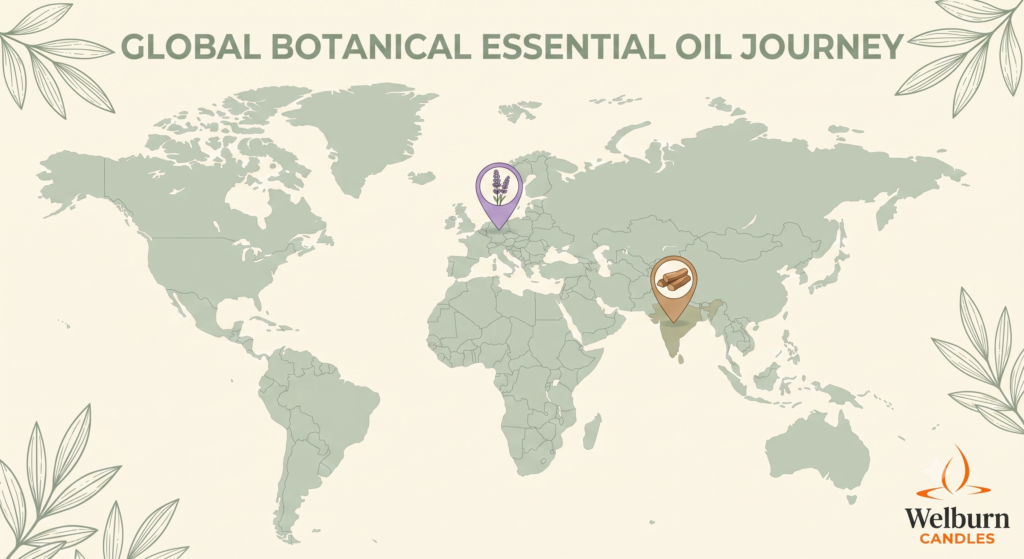
This is the main guide for this cluster. Market-specific guides: India | Germany | USA The wellness economy behind aromatherapy candles is genuinely global — the Global Wellness Institute values the sector at over $5.6 trillion worldwide — but what “wellness” means to a buyer varies significantly by market. A brand building for India’s fast-growing D2C wellness segment, Germany’s naturkosmetik-adjacent retail, and the US self-care aisle are, in practice, building three different products for three different shelves, even if the underlying essential oil formulation science stays constant. For the formulation science itself — essential oil sourcing, GC/MS testing, therapeutic concentration levels — our essential oil candle formulation guide and aromatherapy wellness manufacturing guide cover this in full, and apply regardless of destination market. What this guide and its linked country guides focus on instead is where that formulation lands commercially once it reaches a specific country’s retail and regulatory environment. India represents one of the fastest-growing wellness candle opportunities globally right now — the country’s candle industry overall is projected to grow at a 10.5% CAGR through 2033, with D2C wellness brands specifically driving much of that growth through social-first reach into Tier-2 and Tier-3 cities that traditional retail never touched. Germany’s wellness candle demand is grounded in the country’s own established self-care and naturkosmetik retail culture — roughly 38% of the German population engages in some form of regular self-care practice, and essential oil and candle usage sits squarely inside that behaviour, making German wellness retail a genuinely receptive, if compliance-heavy, market. The US remains the largest single wellness candle market by volume, with self-care and mindfulness positioning now mainstream across mass, specialty, and D2C retail alike — worth reading alongside the compliance detail in our general US candle manufacturers guide, since ASTM and Prop 65 requirements apply to aromatherapy formulations exactly as they do to any other US-bound candle. Frequently Asked Questions Is aromatherapy candle formulation the same regardless of destination market? The underlying essential oil sourcing and formulation science is consistent, but how that formulation is positioned, labelled, and sold varies meaningfully by country’s retail culture and compliance requirements. Which market is currently the fastest-growing for aromatherapy candles? India stands out for growth rate — the broader Indian candle industry is projected to grow at roughly 10.5% CAGR through 2033, with D2C wellness brands driving a significant share of that expansion. Do US compliance requirements apply differently to aromatherapy candles? No — ASTM standards, CPSC labelling, and California Prop 65 apply to aromatherapy and essential oil candles exactly as they do to any other candle sold into the US market. Where can I find country-specific detail for aromatherapy candle brands? This guide links to dedicated market guides for India, Germany, and the USA, covering how wellness positioning and retail channels differ in each.
Aromatherapy Candles for Sleep: Formulating for the Fast-Growing Sleep Wellness Market
Sleep is the fastest-growing subcategory within the global wellness market. According to the Global Wellness Institute, sleep-focused wellness products represent a multi-billion dollar annual market that is growing at double digits as consumers across Europe, North America, and Asia invest in improving their sleep quality. Aromatherapy candles positioned specifically for sleep — formulated with genuine sleep-supporting essential oils at therapeutic concentrations — are one of the most commercially compelling aromatherapy product opportunities available to wellness brands. At Welburn Candles, sleep-focused aromatherapy candle formulation is one of our most developed specialisms. This guide explains the science, formulation approach, and commercial opportunity. The Science of Aromatherapy for Sleep The mechanism by which specific essential oils support sleep is well-documented in clinical literature. Inhalation of aromatic compounds triggers olfactory-limbic pathway activation — sending chemical signals to the brain’s emotional and autonomic nervous system regulation centres. Several essential oils have demonstrated measurable effects on sleep quality, sleep onset latency, and subjective sleep experience in clinical studies. Key Sleep Essential Oils and Their Evidence Base Lavender (Lavandula angustifolia) True lavender is the most scientifically studied sleep-supporting essential oil. Multiple randomised controlled studies demonstrate lavender inhalation’s effects on sleep quality, anxiety reduction, and heart rate variability — all markers of the parasympathetic nervous system activation conducive to sleep onset. At Welburn Candles, our sleep formulations use authenticated Lavandula angustifolia (not lavandin, which has a different chemical profile and weaker anxiolytic effects), verified through GC/MS analysis. Roman Chamomile (Anthemis nobilis) Roman chamomile essential oil contains apigenin — a flavonoid compound with documented mild sedative properties. Combined with lavender in a sleep blend, chamomile deepens the relaxation effect while contributing a delicate, apple-like sweetness to the fragrance character. Vetiver (Vetiveria zizanioides) Vetiver is a deeply grounding, earthy essential oil with a complex woody-smoky character. Its sedative and anxiolytic properties complement lavender in sleep formulations — particularly effective for customers whose sleep difficulty is associated with racing thoughts or mental hyperactivity. Cedarwood (Cedrus atlantica) Cedarwood essential oil contains cedrol, a compound shown in research to have sedative effects through inhalation. Its warm, woody base note character provides an excellent anchoring base note for sleep blend compositions. Formulating a Sleep Aromatherapy Candle Blend At Welburn Candles, our sleep blend formulations are developed as therapeutic synergies — not simply mixtures of sleep-associated oils. The blend architecture considers: All blends are verified for IFRA compliance and CLP allergen disclosure. See our full essential oil candle formulation guide for the complete development process. Frequently Asked Questions Q: How should I position aromatherapy sleep candles for European wellness retail buyers? A: Lead with ingredient authenticity — specify which essential oils you use, their botanical origin, and verification methodology. Avoid unsubstantiated medical claims. Effective positioning language: ‘formulated with GC/MS-verified lavender essential oil, traditionally associated with calm and relaxation’ or ‘designed to support your sleep wind-down routine’. This evidence-adjacent language builds credibility without making claims your product cannot legally support. Q: Can Welburn Candles produce sleep-focused aromatherapy candles as private label for my wellness brand? A: Yes — sleep-focused aromatherapy candle formulations are available both as standard wholesale products from our aromatherapy range and as exclusive private label development. Contact Welburn Candles to discuss your sleep wellness candle brief.
Building an Aromatherapy Candle Brand: From Formulation to Retail Success
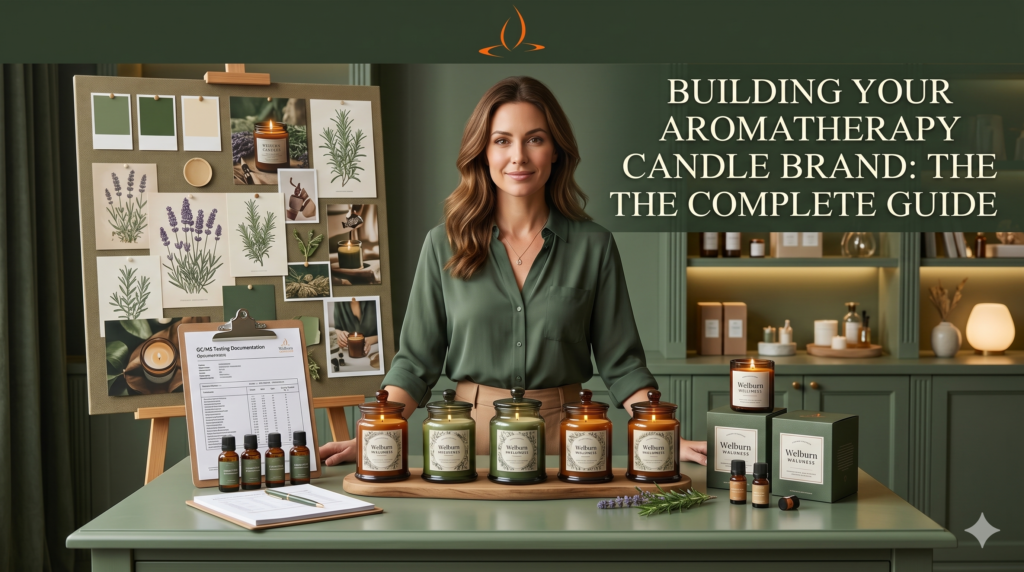
Aromatherapy candles occupy one of the most commercially exciting positions in the consumer goods landscape: at the intersection of home fragrance, wellness, and self-care — three of the fastest-growing consumer categories globally. But building a genuinely credible aromatherapy candle brand requires more than a therapeutic fragrance name and a botanical label aesthetic. It requires authentic essential oil formulation, credible certification, and a retail strategy that connects with genuinely wellness-motivated buyers. At Welburn Candles, our aromatherapy candle manufacturing programme is built specifically for brand owners ready to do this properly. This guide is your complete roadmap. For our full aromatherapy formulation science, see our aromatherapy candle wellness guide. What Genuinely Differentiates an Aromatherapy Candle Brand The aromatherapy candle category is crowded with brands that use therapeutic language without therapeutic substance. The brands that build sustainable commercial success in this category share one characteristic: authentic ingredient differentiation that is verifiable, communicable, and appreciated by genuinely wellness-motivated customers. Authentic aromatherapy brand differentiation is built on: Phase 1: Therapeutic Formulation Development Building an aromatherapy candle brand begins with your therapeutic formulation programme — the set of essential oil blends that will form the core of your range. At Welburn Candles, we guide brand owners through therapeutic brief development, essential oil sourcing and GC/MS verification, synergy blend development, wax compatibility testing, and burn performance validation. See our essential oil candle formulation guide for the full formulation process. Each formulation is developed against a therapeutic objective — sleep and rest, anxiety relief, focus and clarity, meditation and grounding, or energy and uplift — using the essential oil combinations with the strongest evidence base for each intended effect. Phase 2: Certification and Compliance Aromatherapy candle brands require a specific compliance and certification stack that goes beyond standard candle compliance: For the complete certification pathway, see our aromatherapy candle certification guide. Phase 3: Vessel and Packaging for Wellness Positioning Aromatherapy candle packaging must communicate therapeutic authenticity through its materials, typography, and ingredient disclosure. The most effective aesthetic direction for aromatherapy brands combines: For detailed guidance on wellness packaging communication, see our aromatherapy candle packaging guide. Phase 4: Wellness Retail Channel Strategy Aromatherapy candle brands have access to commercial channels that standard home fragrance brands do not. Wellness retail — health food stores, natural beauty retailers, pharmacies, parapharmacies, yoga studios, and spa retail — offers access to highly motivated, quality-focused buyers willing to pay premium prices for authentic therapeutic products. For a complete wellness retail strategy, see our aromatherapy candles for wellness retail guide. Frequently Asked Questions Q: How long does it take to build and launch an aromatherapy candle brand with Welburn Candles? A: The timeline from initial consultation to first production delivery depends on formulation complexity, certification pathway, and packaging development. Clients entering our programme with a clear brief can expect to move from consultation to production within a commercially reasonable timeframe. Contact our team for an accurate timeline based on your specific requirements. Q: Can I build an aromatherapy candle brand that sells both direct-to-consumer and to wellness retail? A: Yes — and the most commercially successful aromatherapy candle brands operate in both channels simultaneously. DTC sales provide the brand story, customer data, and review content that wellness retail buyers evaluate when considering listing decisions. Welburn Candles supports clients in producing compliant products suitable for both D2C and wholesale channels from a single production run. Q: What is the price premium I can expect for an authentic aromatherapy candle brand versus a standard scented candle brand? A: Authentic aromatherapy candle brands with genuine essential oil credentials, verified testing, and credible certification typically command a 30–50% retail price premium over equivalent non-therapeutic scented candles in European wellness retail channels. This premium more than justifies the additional investment in essential oil ingredients, GC/MS testing, and certification. Contact Welburn Candles to discuss the commercial case for your specific brand concept.