As experienced jar candle manufacturers, the team at Welburn Candles works with both glass and tin vessels daily, and we’ve seen firsthand how this choice impacts brand perception, retail pricing, sustainability credentials, and fragrance performance.
Glass Candle Vessels: Premium Appeal and Performance
Aesthetic Advantages
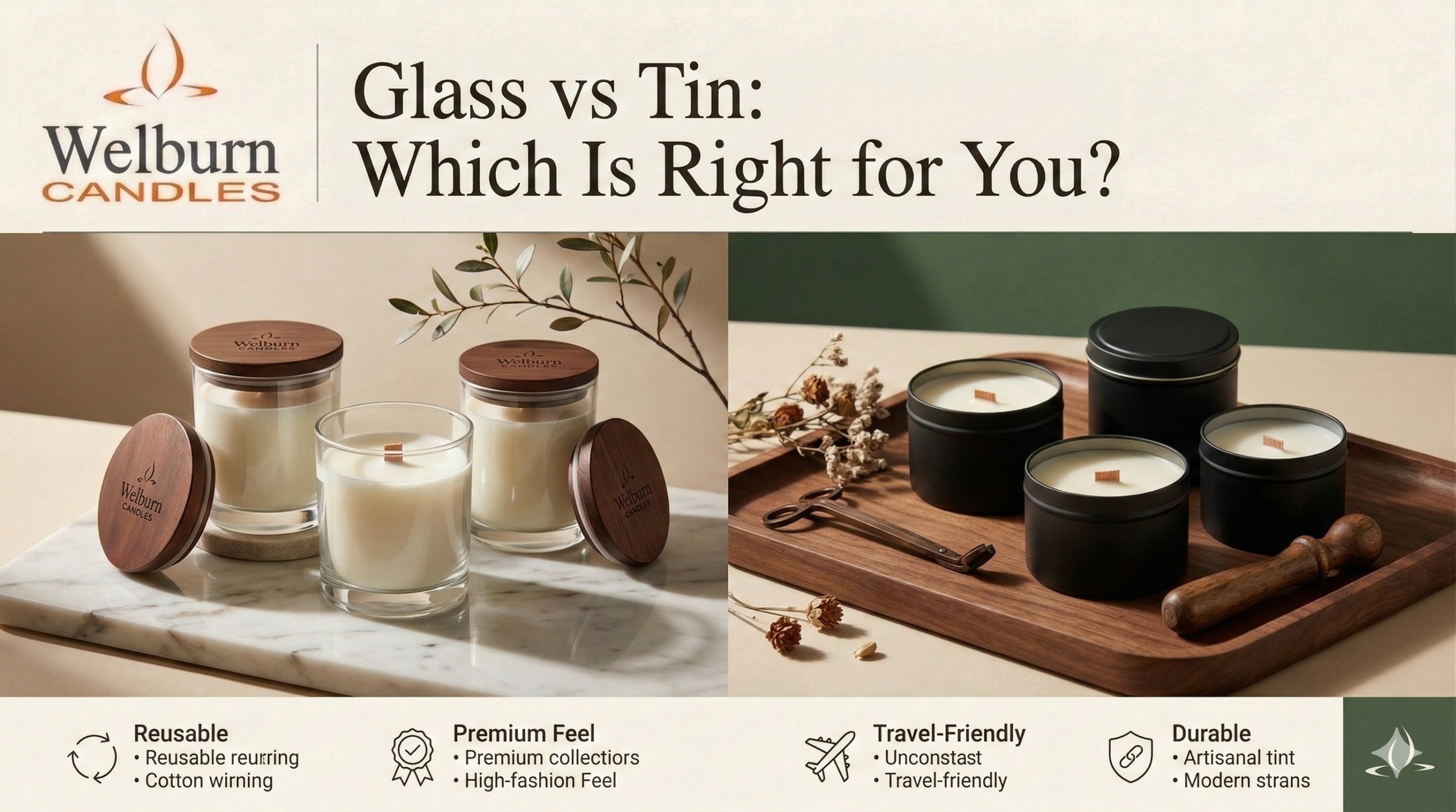
Glass vessels communicate luxury, quality, and craft. In a retail environment, glass candles catch the light and create an inviting visual presentation that consistently outperforms tin on premium retail shelves.
Fragrance Performance in Glass
Glass is thermally stable and non-reactive, meaning it won’t interact with fragrance compounds over time. Particularly important for scented candle manufacturing where consistent fragrance throw throughout the burn is a key quality indicator.
Sustainability of Glass
Glass is 100% recyclable and reusable. Consumer research by WRAP UK shows that candle customers who repurpose glass vessels become significantly more loyal to the brand.
Tin Candle Vessels: Practicality and Portability
When Tin Wins
Tin vessels are lighter (reducing shipping costs), virtually unbreakable (ideal for travel candle lines), and stack efficiently for compact retail displays.
Fragrance Performance in Tin
Tin conducts heat quickly, which can accelerate hot throw. However, tin can impart a faint metallic note to very delicate fragrances, so always test fragrance in your chosen vessel type.
The Hybrid Approach: Building a Tiered Range
Many of our most successful clients use both: glass vessels for their premium tier and tin for their accessible, everyday range. For more on our eco-forward packaging options, see our sustainable candle manufacturers guide.
| 💡 Welburn Candles tip: Start with a small glass vessel range (100–200ml) to establish premium positioning, then introduce tin vessels as an accessible entry point once the brand has traction. |
❓ Frequently Asked Questions
Q1: Does the vessel type affect burn time?
A: Yes, significantly. Glass vessels retain heat differently than tin, affecting melt pool temperature and wax consumption rate. Our team tests and calibrates wick size, wax blend, and fragrance load for each specific vessel to ensure optimal burn time.
Q2: Can I use the same wax formulation in glass and tin vessels?
A: Not always. Different vessel materials have different thermal properties that affect how wax melts and fragrance releases. Welburn Candles develops vessel-specific formulations to ensure optimal performance in each container type.
Q3: Which vessel type is better for high-end retail?
A: Glass consistently outperforms tin in premium and high-end retail environments. The visual weight, light interaction, and tactile quality of glass signals quality to consumers in a way that tin cannot match.
Q4: Are there minimum order differences between glass and tin vessels?
A: In some cases, yes — glass vessels require more careful packing and have higher per-unit logistics costs, which can influence MOQ structures. Contact Welburn Candles to discuss your specific requirements.
Q5: What’s the most popular jar candle vessel size for retail?
A: In the UK and European markets, 200–250ml glass jar candles are the sweet spot for retail — they offer a generous burn time (typically 40–50 hours), a strong retail price point (£18–£28), and are manageable in size for gift and impulse purchase.
Ready to choose the right vessel for your candle brand? Welburn Candles will guide you through all options and help you build a product range that sells.