How to Design Your Private Label Candle Packaging: Expert Tips from Welburn Candles
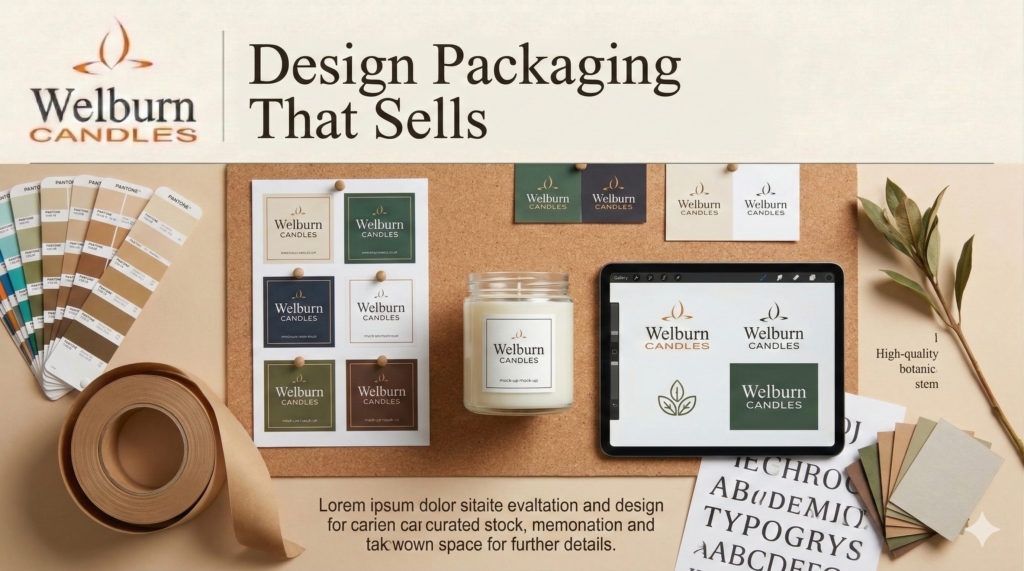
In the candle market, your packaging is your most powerful silent salesperson. At Welburn Candles, our private label clients consistently find that packaging investment pays for itself many times over in improved conversion rates, retail listings, and customer lifetime value. The Label: Your Brand’s First Impression Typography and Readability Your label’s typography should be immediately readable at arm’s length. According to brand packaging research by Nielsen, consumers make purchase decisions within 7 seconds of seeing a product. Choose fonts that reflect your brand personality. Colour Psychology for Candle Labels The Vessel: Your Packaging’s Foundation Work with your vessel’s dimensions from day one. At Welburn Candles, we provide exact vessel dimensions and label templates as part of our private label manufacturing service. See our jar candle manufacturers guide for the full vessel range. Secondary Packaging: Boxes, Bags, and Wrapping Including sustainability messaging on your packaging is increasingly important. See our sustainable candle manufacturers guide for the credentials we can provide. Digital and E-Commerce Packaging Considerations If selling direct-to-consumer online, your packaging must withstand transit and create an unboxing experience customers want to share on social media. 💡 Welburn Candles design tip: Always photograph your candle packaging outdoors in natural light for your website. Indoor product photography rarely captures the true warmth and depth of glass vessels. ❓ Frequently Asked Questions Q1: How much does professional candle label design cost? A: Professional candle label design typically costs £300–£1,200 depending on the designer’s experience and complexity. This is one area where investing in quality pays dividends — a professionally designed label that converts at retail is worth many times its design cost. Q2: Do I need a separate designer for my label and my box? A: Not necessarily. Many brand and packaging designers can handle both. Ensure your chosen designer has experience with print production specifications — candle labels require specific colour profiles (CMYK or Pantone), bleed allowances, and material specifications. Q3: What material should my candle label be printed on? A: For glass vessels, self-adhesive PP (polypropylene) labels offer excellent durability, moisture resistance, and a premium finish. For a more natural, artisanal look, uncoated paper labels on kraft stock are popular. Q4: How do I ensure my label design looks the same in print as on screen? A: The key is working in CMYK colour mode from the start rather than RGB, and requesting a physical colour proof from your printer before approving the full print run. Q5: Can Welburn Candles help with label and packaging design? A: Yes — Welburn Candles offers in-house design support as part of our private label manufacturing service. Our design team has specialist experience in candle packaging and works within your brand guidelines to create artwork that’s both beautiful and print-production ready. Let’s create packaging that makes your candles impossible to ignore. Contact Welburn Candles today.
Aromatherapy Candles for Anxiety: Which Scents Work Best?
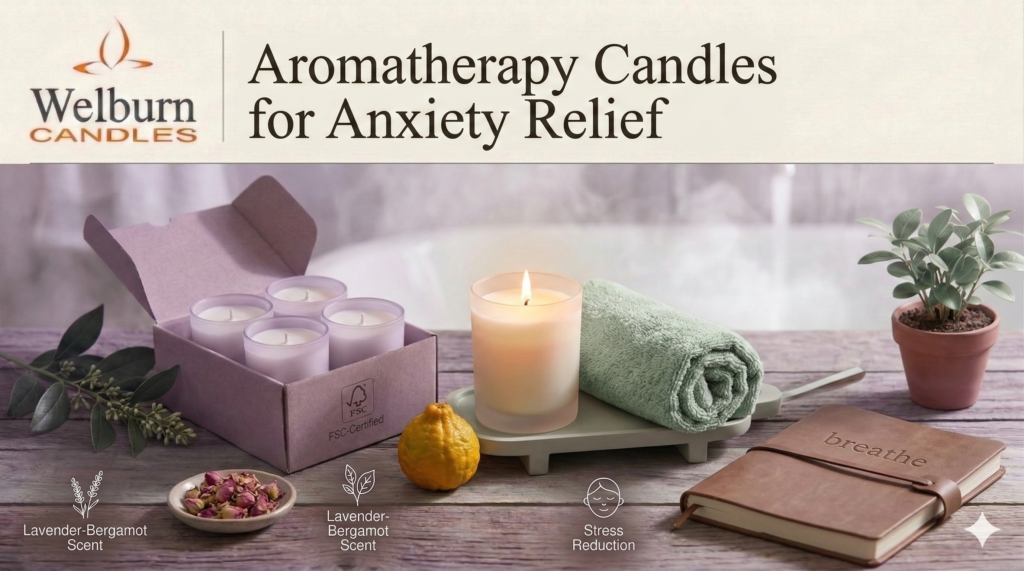
Aromatherapy candles — when formulated with genuine therapeutic essential oils — offer a simple, affordable, and evidence-supported approach to anxiety management. At Welburn Candles, we’ve developed aromatherapy candle ranges specifically designed for anxiety support. The Most Effective Essential Oils for Anxiety 1. Bergamot Bergamot is the most thoroughly studied fragrance for anxiety reduction. A 2015 systematic review in Evidence-Based Complementary and Alternative Medicine found consistent anxiety-reducing effects across multiple clinical trials. 2. Rose Rose essential oil has demonstrated significant anxiolytic effects in several human clinical trials, with particular effectiveness in pre-procedural anxiety and postpartum anxiety. 3. Clary Sage Shown to significantly reduce cortisol levels in women experiencing hormonal anxiety. Blends beautifully with lavender — see our lavender candles for sleep guide for more on complementary therapeutic combinations. 4. Frankincense Compounds in frankincense activate ion channels in the brain that reduce anxiety, with particular effectiveness in the context of mindfulness and breathwork practices. 5. Ylang Ylang Demonstrated significant effects on reducing anxiety and blood pressure in multiple clinical studies. Requires careful concentration management — which is why working with an experienced aromatherapy candle manufacturer like Welburn Candles is essential. Our Recommended Anti-Anxiety Blends ‘Calm’ Blend Lavender + Bergamot + Cedarwood: A balanced, accessible blend that delivers immediate calming effect with a sophisticated woody base. ‘Restore’ Blend Rose + Clary Sage + Ylang Ylang: A deeply floral, emotionally supportive blend popular with wellness and women’s health brands. ‘Ground’ Blend Frankincense + Sandalwood + Patchouli: An earthy, meditative composition ideal for yoga studios and mindfulness-focused brands. Marketing Aromatherapy Candles for Anxiety: What You Can and Can’t Claim Evidence-based wellbeing claims (e.g., ‘supports a sense of calm’) are generally acceptable when accurately substantiated. The Advertising Standards Authority provides guidance on acceptable wellbeing claims. Welburn Candles provides marketing claim review as part of our aromatherapy manufacturing service. Also explore how anxiety relief candles pair with our broader aromatherapy candle manufacturing range, and consider building a complementary sleep candle range as a natural brand extension. ❓ Frequently Asked Questions Q1: Can aromatherapy candles genuinely help with anxiety? A: Peer-reviewed research supports the use of specific essential oils — particularly lavender, bergamot, rose, and frankincense — for reducing self-reported anxiety and measurable physiological stress markers. Aromatherapy is best understood as a supportive wellness practice that can complement professional mental health support. Q2: How long should I burn an aromatherapy anxiety candle to feel the benefit? A: In clinical studies, anxiety-reducing effects have been observed after 10–30 minutes of essential oil inhalation. For candle use, we recommend burning for a minimum of 20–30 minutes in a medium-sized room with windows closed for optimal essential oil concentration. Q3: Which is better for anxiety — candles or diffusers? A: Both delivery methods are effective. Candles offer a multisensory experience — visual warmth of flame, fragrance, and heat — that many users find more psychologically comforting than diffusers. The ritual of lighting a candle can itself become a powerful calming cue. Q4: Are all bergamot essential oils equally effective for anxiety? A: No — bergamot quality varies significantly. Look for bergapten-free bergamot (BF bergamot) in therapeutic formulations, which has had the potentially phototoxic compound removed while retaining full therapeutic activity. All Welburn Candles aromatherapy formulations using bergamot specify BF-grade essential oil. Q5: Can I create a custom anxiety relief candle range with Welburn Candles? A: Absolutely. Our aromatherapist consultants work with wellness brands to develop custom anxiety-support formulations tailored to your brand positioning and target customer, with full therapeutic ingredient documentation and evidence-based marketing support. Create an anxiety-support candle range that genuinely changes how your customers feel. Contact Welburn Candles to start your aromatherapy manufacturing project today.
How to Start a Jar Candle Business: From Idea to First Sale
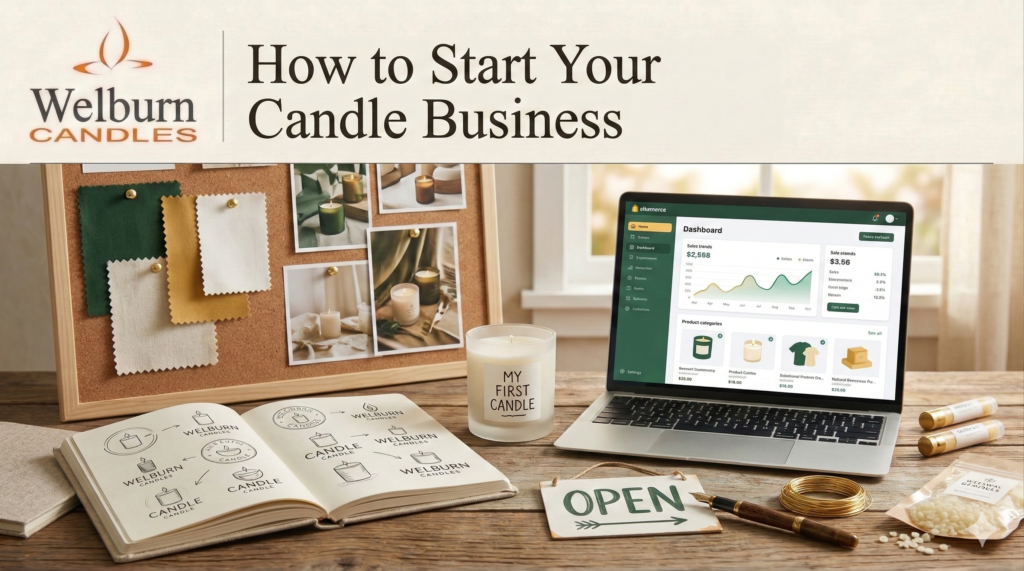
Starting a jar candle business is one of the most accessible and rewarding product ventures available to new entrepreneurs today. With strong consumer demand, low startup costs, and genuine opportunities for brand differentiation, a jar candle business can go from concept to profitable reality in as little as three months. The key is partnering with the right jar candle manufacturer from day one — because your manufacturing partner shapes your product quality, unit cost, compliance, and ultimately your brand’s reputation. At Welburn Candles, we’ve guided hundreds of first-time candle entrepreneurs through every stage of this journey. Here’s the complete roadmap. Step 1: Define Your Niche and Brand Identity For inspiration on fragrance positioning, read our scented candle manufacturers guide which covers fragrance development in depth. Step 2: Product Development and Sampling Work with a jar candle manufacturer like Welburn Candles to develop 3–5 core SKUs. Start with a single vessel size and style to test market response before expanding your range. Step 3: Legal, Labelling, and Compliance UK candle brands must comply with CLP (Classification, Labelling and Packaging) regulations for fragrance allergen disclosure. Your manufacturer should provide Safety Data Sheets (SDS) and IFRA certificates. Step 4: Pricing for Profitability Multiply your total landed cost by 2.5–3x for wholesale price, and by 5–6x for recommended retail price. Premium jar candles in the 200–250ml range typically retail at £18–£30 in the UK market. Step 5: Launch Channels Most successful candle brands launch across: their own Shopify website, local gift markets, Instagram and Pinterest, and targeted outreach to independent boutiques. 🚀 Welburn Candles offers a complete startup package for new candle brands — including product development, sampling, packaging sourcing, and compliance documentation. ❓ Frequently Asked Questions Q1: How much capital do I need to start a jar candle business? A: A typical first production run with a professional manufacturer costs £2,000–£8,000 depending on order quantity and complexity. Add branding and website costs of £1,000–£3,000 for a total startup investment of £3,000–£11,000. Q2: Do I need insurance to sell candles? A: Yes. Product liability insurance is essential for any candle business. In the UK, expect to pay £150–£400 per year for a starter policy. Your insurer will typically want to see compliance documentation from your manufacturer. Q3: How long does it take to receive my first production order? A: A typical first production order takes 6–10 weeks from initial consultation to delivery, including sampling, approval, production, and shipping. Q4: Should I sell wholesale or direct-to-consumer? A: Both channels have merit. Direct-to-consumer offers higher margins and direct customer relationships. Wholesale to retailers builds brand visibility and creates volume sales. Most successful candle brands pursue both from the start. Q5: What’s the minimum order quantity for a new brand at Welburn Candles? A: We work with new brands from their earliest stage and offer competitive MOQs designed to reduce startup risk. Contact us to discuss your specific requirements and we’ll build a production plan that makes commercial sense. Start your candle business journey with Welburn Candles — your manufacturing partner from first sample to national retail launch.
How Candle Manufacturers Are Going Green: Sustainability in Candle Production
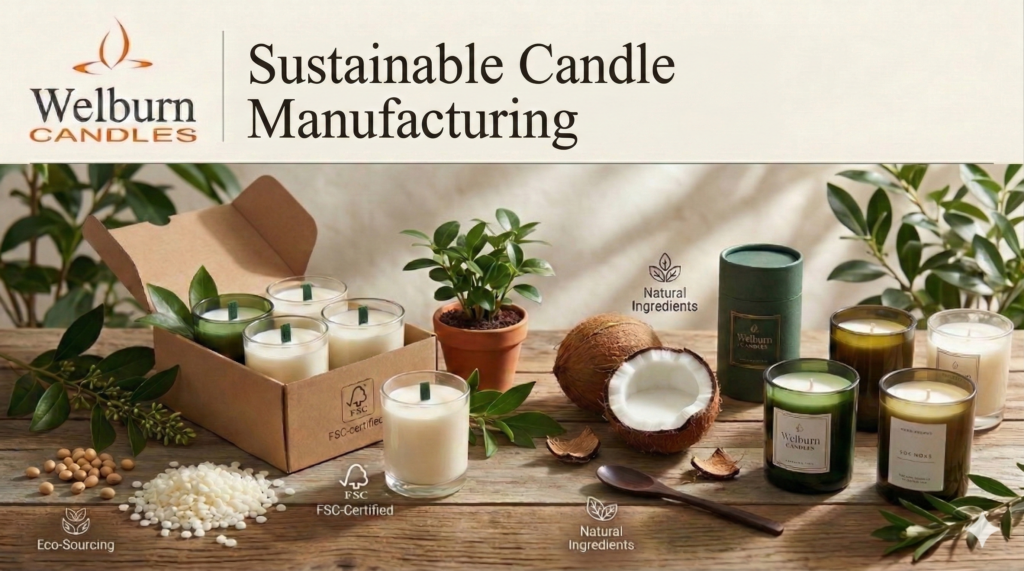
Sustainable candle manufacturers are reshaping the industry — and consumer demand is driving the change. A 2024 Nielsen study found that over 73% of global consumers are willing to pay a premium for eco-friendly products, and candles are no exception. At Welburn Candles, sustainability is embedded into every stage of our candle manufacturing process — from natural wax sourcing and phthalate-free fragrance formulation to FSC-certified packaging and energy-efficient production. Natural Wax Alternatives: The Foundation of Sustainable Candles Soy Wax Soy wax is biodegradable, derived from renewable crops, and produces significantly lower soot than paraffin. Welburn Candles sources certified non-GMO soy wax from responsible agricultural suppliers. Coconut Wax Coconut wax is prized for its exceptional scent throw and creamy, slow burn. Derived from sustainably harvested coconuts, it produces virtually no black soot. Beeswax Natural beeswax is sourced from certified ethical apiaries that prioritise bee colony health and sustainable harvesting practices. Sustainable Fragrance: Beyond Synthetic Chemicals At Welburn Candles, we offer IFRA-compliant fragrance formulations with options for natural essential oil blends and full allergen transparency. Explore our aromatherapy candle manufacturing range for our purest fragrance options. Eco-Friendly Packaging Solutions Energy Efficiency in Our Manufacturing Facility Our facility has undergone significant energy efficiency upgrades including LED lighting, heat recovery systems in wax-pouring stations, and renewable energy sourcing for production equipment. 🌿 Welburn Candles can provide full sustainability documentation including raw material certifications, carbon footprint estimates, and packaging recyclability data to support your retail and marketing needs. ❓ Frequently Asked Questions Q1: Is soy wax really better for the environment than paraffin? A: Soy wax is generally considered more sustainable than paraffin because it’s derived from a renewable crop rather than petroleum. However, the overall sustainability depends on agricultural practices. Welburn Candles sources non-GMO soy wax from suppliers with verified sustainable farming practices. Q2: Do natural wax candles burn differently than paraffin candles? A: Yes, natural waxes typically have a lower melt point and require careful wick selection to achieve an optimal burn pool. Our R&D team extensively tests each wax type with compatible wicks and vessel combinations to ensure a clean, even burn regardless of the wax used. Q3: Can I get sustainable candles at competitive wholesale prices? A: Sustainable doesn’t have to mean expensive. By optimising our supply chain and manufacturing processes, Welburn Candles offers eco-friendly candle lines at competitive wholesale rates. Contact us to discuss pricing for your specific volume requirements. Q4: Are essential oil candles safer than fragrance oil candles? A: Both can be perfectly safe when formulated correctly and used as directed. Essential oils are natural but can be sensitisers at high concentrations, while high-quality synthetic fragrance oils are formulated to IFRA safety standards. We offer both options. Q5: What certifications should a sustainable candle manufacturer have? A: Key certifications to look for include REACH compliance for fragrance safety, FSC certification for packaging, Rainforest Alliance or RSPO certification for palm-derived ingredients, and ideally ISO 14001 environmental management certification. Join the growing community of brands building a greener future at Welburn Candles.
The Best Selling Scented Candle Fragrances by Season
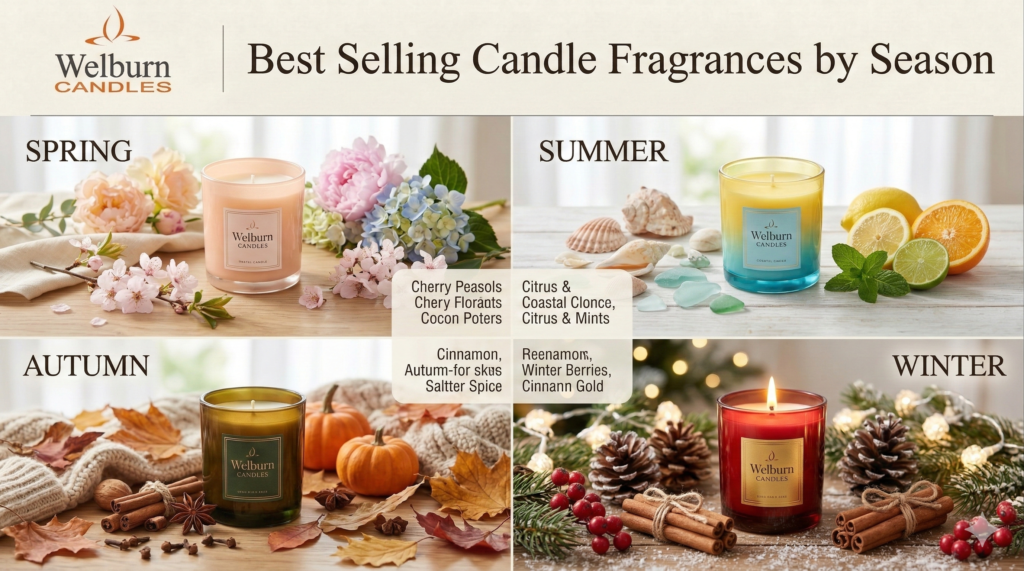
Understanding fragrance seasonality is one of the most valuable strategic advantages a candle brand can have. At Welburn Candles, we analyse sales data across our client base to identify which fragrance families drive the highest sales volumes each season. Spring: Fresh, Floral, and Green Top Spring Fragrances: Summer: Citrus, Marine, and Tropical Top Summer Fragrances: Autumn: Warm, Spiced, and Woody Autumn is the candle industry’s highest sales season. Scented candle manufacturers see their strongest demand in September and October. Top Autumn Fragrances: Winter: Rich, Festive, and Indulgent The Christmas and winter gifting period represents up to 40% of annual candle sales for many brands. Top Winter Fragrances: Building a Year-Round Seasonal Fragrance Strategy Maintain a core range of year-round fragrances complemented by seasonal collections. Explore our private label candle manufacturing guide to understand how seasonal collections fit into a full brand programme. 📅 Plan your seasonal fragrance strategy 6 months in advance. Retail buyers expect to see autumn/winter collections in April–May, and spring/summer collections in October–November. ❓ Frequently Asked Questions Q1: How far in advance should I plan seasonal candle collections? A: Plan at least 6 months ahead for major seasonal collections. This allows time for fragrance development and approval (4–6 weeks), production scheduling (2–4 weeks), and delivery to retailers (2–4 weeks before the season begins). For Christmas, begin planning in February–March. Q2: Should I retire fragrances from previous seasons or keep them? A: Retire limited-edition seasonal fragrances to maintain urgency and drive repeat purchases. However, if a seasonal fragrance becomes a bestseller, consider adding it to your core year-round range. Customer data is your best guide. Q3: How many seasonal fragrances should I introduce each season? A: For most candle brands, 3–5 new seasonal fragrances per season is commercially manageable and sufficient to refresh the range without overwhelming your production capacity or confusing customers. Q4: Can I use the same fragrance bases but adjust them slightly for different seasons? A: Absolutely. A core vanilla fragrance can be brightened with citrus top notes for summer and deepened with spice and amber for winter, creating consistency while delivering genuine seasonal variation. Q5: Which season generates the most candle sales? A: Winter (October–December) consistently generates the highest candle sales volumes, typically representing 35–45% of annual sales. Planning production and cash flow around this seasonal skew is essential for candle brand success. Ready to build a market-leading seasonal fragrance strategy? Welburn Candles is ready to help you develop and produce seasonal collections that drive repeat purchases and retail success.
Lavender Candles for Sleep: The Science Behind the World’s Most Popular Aromatherapy Scent
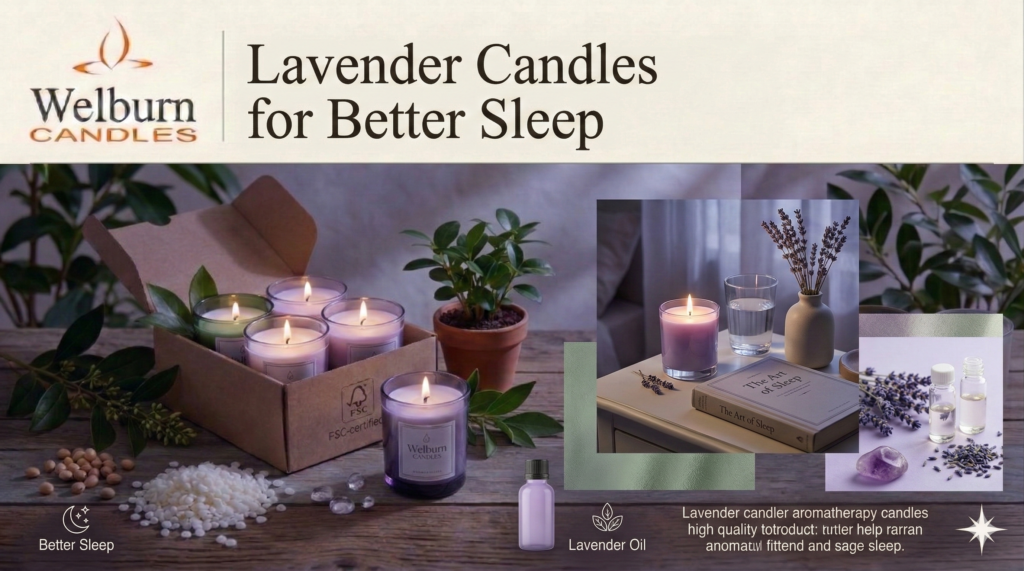
Lavender candles for sleep are the most scientifically supported product in the entire aromatherapy candle category. No other plant fragrance has accumulated the weight of clinical evidence supporting lavender’s therapeutic properties — from anxiety reduction to sleep improvement and cognitive enhancement. A landmark study published in the Journal of Alternative and Complementary Medicine found that lavender aromatherapy significantly improved sleep quality in participants with insomnia, with up to 20% improvement in sleep onset and duration. At Welburn Candles, we’ve made lavender candles for sleep a cornerstone of our therapeutic candle range — and understanding the science behind lavender’s benefits will help your brand tell a more compelling, credible product story. The Chemistry of Lavender’s Therapeutic Effects Lavender’s therapeutic properties are primarily attributable to linalool and linalyl acetate — terpene compounds that have been shown to: Lavender for Sleep: What the Research Shows A landmark study published in the Journal of Alternative and Complementary Medicine found lavender aromatherapy significantly improved sleep quality in college students with insomnia — up to 20% improvement in sleep onset and duration. Choosing the Right Lavender for Aromatherapy Candles True Lavender (Lavandula angustifolia) The gold standard for therapeutic aromatherapy. Highest concentrations of linalool and linalyl acetate. All Welburn Candles therapeutic lavender formulations use true lavender from certified organic farms. Lavandin (Lavandula x intermedia) Higher camphor content diminishes its therapeutic value for sleep applications — often used in commercial ‘lavender’ products where cost is the primary driver. Maximising Therapeutic Benefit: Usage Recommendations Explore how a sleep-focused candle range fits into your aromatherapy candle manufacturing programme, and see how our candles for anxiety guide can complement a sleep range. ❓ Frequently Asked Questions Q1: How much lavender essential oil should be in an aromatherapy candle to be therapeutically effective? A: For a genuine therapeutic effect, a lavender aromatherapy candle should contain a minimum of 3–5% true lavender essential oil relative to total wax weight. Welburn Candles’ therapeutic lavender formulations use 5–8% essential oil concentration for optimal therapeutic delivery and scent performance. Q2: Can lavender candles replace sleep medication? A: Lavender aromatherapy is a complementary wellness practice and should not be presented as a medical treatment or replacement for prescribed medication. However, for people experiencing mild sleep difficulties, evidence does support lavender aromatherapy as a safe, effective supportive practice. Q3: Are lavender candles safe for children? A: Pure lavender essential oil at low concentrations is generally considered safe for children over 2 years old. However, we recommend conservative essential oil concentrations in products marketed for children’s environments, and always recommend that candles are burned in supervised settings away from children’s reach. Q4: What’s the difference between a lavender fragrance oil candle and a lavender essential oil candle? A: Lavender fragrance oil candles use synthetic or blended fragrance compounds that mimic the scent but don’t contain the therapeutically active compounds found in genuine lavender essential oil. Only true lavender essential oil candles can make evidence-based therapeutic claims. Q5: Can I combine lavender with other essential oils in an aromatherapy candle? A: Absolutely. Lavender combines beautifully with chamomile for enhanced sleep support, with bergamot for anxiety relief, and with cedarwood for deep relaxation. Our aromatherapist consultants can develop a bespoke blend for your brand’s sleep candle range. Ready to build a science-backed sleep aromatherapy candle range? Contact Welburn Candles to discuss your therapeutic candle development project.