This guide is part of our main cluster: Candle Manufacturers: A Worldwide Buyer’s Market Guide. Also see: UK | USA
Germany is one of the most consequential candle markets in Europe to get right, both because of its size and because German buyers and consumers apply some of the most exacting sustainability and quality expectations in the region. The German candle market generated roughly USD 922 million in revenue in 2025 and is projected to reach USD 1.5 billion by 2033, growing at a 6.5% CAGR — container candles are the largest segment, and wellness-positioned, essential-oil scented candles are one of the fastest-growing categories within it.
Compliance for Germany runs through EU-wide frameworks rather than a country-specific standard: REACH restricts hazardous substances, CLP governs hazard labelling, and the EN candle standards (EN 15426 for sooting behaviour, EN 15493 for fire safety, EN 15494 for safe-burning label information) apply the same way they do across the rest of the EU. Germany’s own product safety enforcement — administered through the Bundesanstalt für Arbeitsschutz und Arbeitsmedizin (BAuA) for chemicals and the German market surveillance authorities for general product safety — sits on top of this EU baseline rather than replacing it. ECHA’s own candle-specific guidance is a useful starting reference for what a manufacturer’s documentation needs to cover before a shipment reaches German customs.
Sustainability is not a nice-to-have for German buyers — it is close to a baseline expectation. Roughly 42% of German consumers report being more likely to buy products made from sustainable materials, and natural wax formulations (soy, beeswax) command a real, if smaller, share of the market against conventional paraffin. A candle manufacturer with genuine natural wax and sustainable packaging capability has a meaningfully easier time winning German retail listings than one offering paraffin-only production.
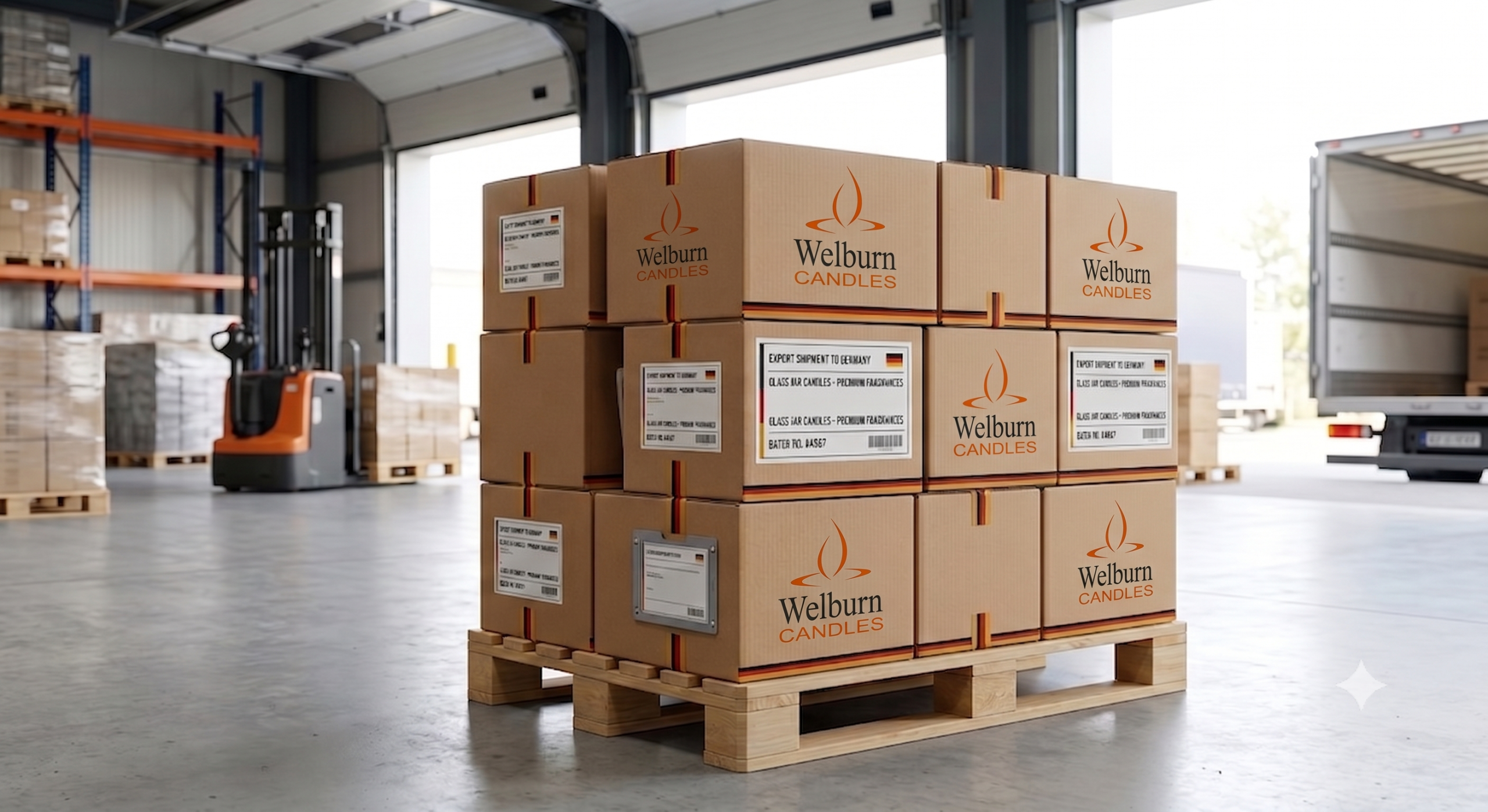
German retail buyers, whether at drugstore chains, home décor retailers, or e-commerce marketplaces, typically expect fragrance allergen declarations on-pack (per CLP), full ingredient transparency, and clear country-of-origin marking. Documentation delays at this stage are one of the most common reasons a first shipment to Germany gets held at customs, so it’s worth confirming your manufacturer’s compliance paperwork is prepared before production, not after.
For the RFQ specification checklist to send a candle manufacturer when sourcing for Germany or any EU destination, see our guide to requesting a quote from candle manufacturers, and for the private label side of a German launch, our private label packaging guide covers CLP-compliant label design specifically.
Frequently Asked Questions
What compliance framework applies to candles sold in Germany?
Germany operates under the same EU-wide framework as other member states — REACH, CLP, and the EN candle standards — enforced domestically through German market surveillance authorities on top of that EU baseline.
How important is sustainability to German candle buyers?
Very. Roughly 42% of German consumers report favouring products made from sustainable materials, making natural wax and eco-packaging capability a genuine competitive advantage when sourcing for this market.
What’s the largest candle segment in the German market?
Container candles are currently the largest segment, with wellness-positioned scented and aromatherapy candles among the fastest-growing categories.
Does a candle manufacturer need Germany-specific certification, separate from EU certification?
No single Germany-only certification replaces EU compliance — REACH, CLP, and EN standards apply. What differs is the rigour of enforcement and buyer expectations around sustainability documentation.