Candle Manufacturers in Bangalore: A Sourcing Guide for Indian & Export Brands
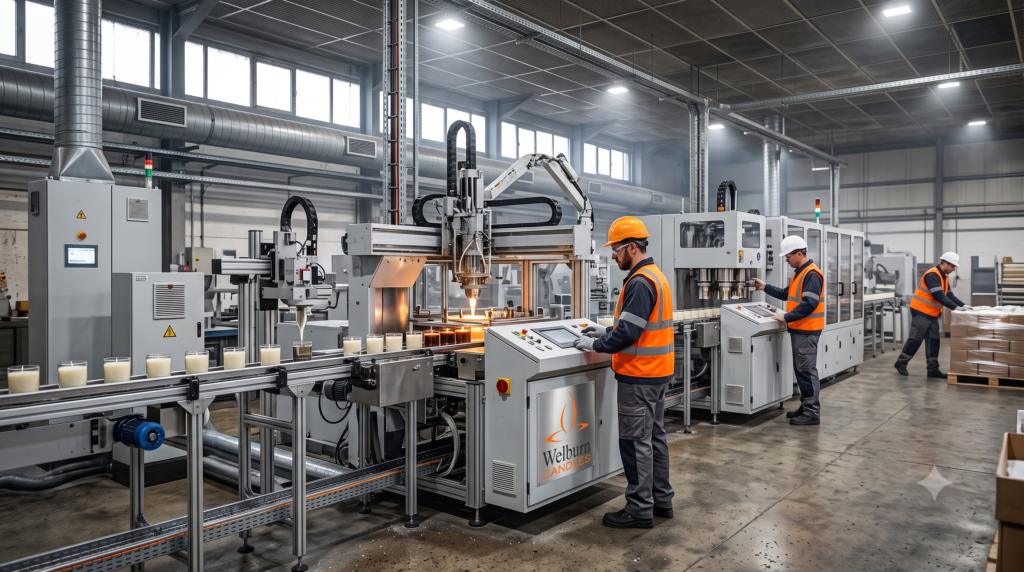
See also our export-market guides: Candle Manufacturers for US Buyers: ASTM, CPSC & Prop 65 | Germany | UK Introduction Most conversations about sourcing candles from India focus on export logistics — what it takes to ship to the US, EU, or UK. But there’s a growing segment of buyers asking a different question entirely: which candle manufacturers in Bangalore can they actually visit, audit, and build a working relationship with locally — whether they’re an Indian D2C brand, an Amazon India seller, or an export-focused startup that wants an in-person facility relationship before committing to bulk orders. Why Bangalore Specifically Bangalore offers a combination that’s genuinely hard to find elsewhere in India’s candle manufacturing landscape: a skilled industrial workforce built up over decades, reasonable logistics access to Chennai port for export shipments, and increasing adoption of automated, German-engineered production machinery that brings consistency closer to what international buyers expect from established manufacturing hubs. The Factory Visit and Audit Process For brands — especially new ones — that want to see a facility before committing, an in-person or virtual audit typically covers production floor conditions, quality control checkpoints, certification documentation (ISO 9001:2015, SA 8000), and a walkthrough of how fragrance formulation and wax filling actually happen. This kind of transparency is far easier to arrange with a Bangalore-based manufacturer than with an overseas-only supplier relationship. Domestic MOQ Flexibility vs. Export MOQ Tiers Domestic Indian orders — whether for a D2C brand or a regional retail chain — often work on different MOQ structures than export orders, since shipping logistics, documentation, and currency considerations differ substantially. A manufacturer serving both domestic and export buyers from the same facility should be able to clearly explain how these tiers differ for your specific volume. Supporting Both Amazon India Sellers and Global Exporters One underappreciated advantage of working with a Bangalore-based manufacturer with genuine export credentials is the ability to scale from a domestic Amazon India or D2C launch into international export — for jar candles, scented candles, or private label lines — without needing to switch manufacturing partners as your business grows. Our Bangalore Facility Our facility in Bangalore holds ISO 9001:2015 & SA 8000 certification, runs 27 tonnes/day production capacity across tealights, jar candles, and household candles, and supports both domestic Indian brands and export clients across 20+ countries — all from a single, auditable production site. Get in touch to arrange a facility conversation or visit. FAQs Can I visit the Bangalore factory before placing an order? Yes, we support in-person and virtual facility audits for brands who want to see production conditions, certifications, and quality control processes before committing to an order. Do you supply both domestic Indian retailers and export brands? Yes, our Bangalore facility supports both domestic Indian D2C and Amazon India sellers as well as export clients shipping to 20+ countries, often from the same production runs. What certifications does the Bangalore facility hold? We hold ISO 9001:2015 and SA 8000 certification, covering quality management and social accountability standards respectively. What’s the minimum order for Indian D2C or Amazon India sellers? Domestic MOQs are typically structured differently from export MOQs — share your target volume and product format and we’ll walk you through the specific tier that applies.
Aromatherapy Candle Private Label Manufacturing: A Wellness Brand Launch Guide
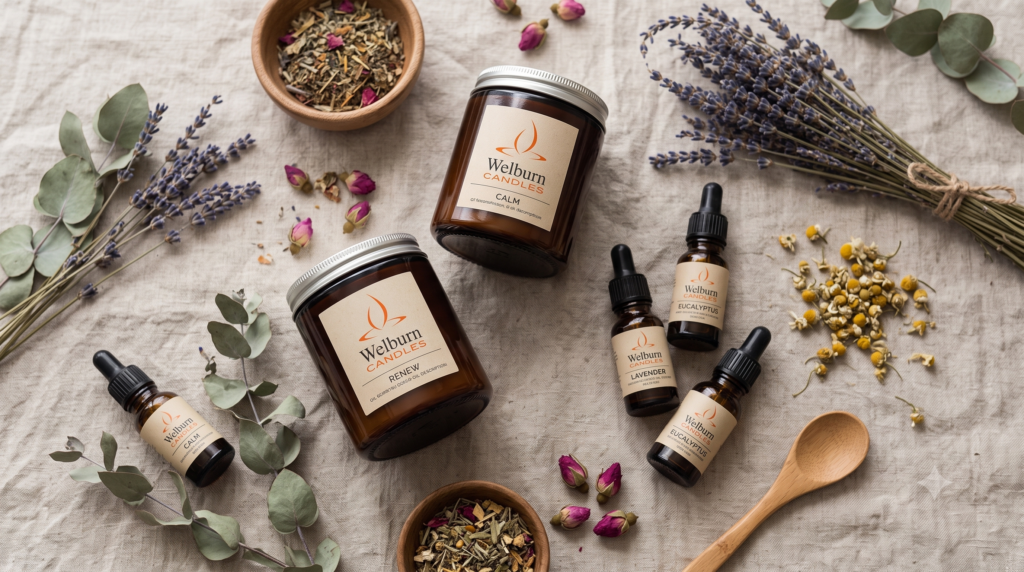
This guide complements our Aromatherapy Candle Manufacturers cluster — see USA | Germany | India market guides. Introduction Most guidance on aromatherapy candles focuses on where to sell them. This one focuses on something more foundational: how to actually build a private label aromatherapy line from scratch, if you’re a wellness founder who knows your brand positioning but hasn’t yet gone through the manufacturing process. Essential Oil vs. Synthetic Aromatherapy Fragrance True aromatherapy positioning depends on essential oil or essential-oil-adjacent fragrance formulation rather than purely synthetic fragrance oils — though in practice, many effective aromatherapy candles use carefully blended combinations of both to balance authenticity, cost, and fragrance performance (pure essential oil candles can struggle with hot throw compared to blended formulations). A manufacturer experienced in aromatherapy candle formulation should be able to walk you through this trade-off honestly rather than defaulting to whichever is cheaper. Wellness Brand Packaging Expectations Apothecary-style packaging — minimal labels, recyclable materials, muted natural color palettes — has become close to a category standard for wellness-positioned candle brands. This isn’t just aesthetic preference; it signals ingredient transparency and environmental consciousness that wellness consumers actively look for when evaluating a new brand. Developing a Signature Scent Line Most wellness candle brands launch with 3-5 SKUs built around a coherent story — energizing citrus and herb blends, grounding wood and amber blends, calming lavender and chamomile blends. Working through fragrance sample iterations with your manufacturer before committing to bulk production lets you refine each SKU until the whole line feels intentional rather than assembled from a generic catalog. From Concept to Sample Approval A well-run private label aromatherapy launch typically moves through an initial brief and fragrance direction, several rounds of sample iteration and feedback, formulation lock and packaging finalization, then bulk production. Rushing past the sample iteration stage is the most common reason wellness brands end up unhappy with their first bulk order — it’s worth budgeting real time for this step. Spa & Wellness Retail vs. General Home Fragrance Retail Positioning matters for where your line eventually sells. A candle formulated and packaged specifically for spa and wellness retail — think treatment rooms, wellness boutiques, yoga studios — often commands a different price point and packaging expectation than a candle aimed at general home fragrance retail, even if the underlying fragrance quality is similar. Deciding this early shapes both formulation and packaging decisions. Where Jar Format Fits In Most aromatherapy candles use jar formats specifically because the wider glass surface supports stronger fragrance throw — see our full jar candle manufacturing guide for format-specific sourcing considerations that apply directly to an aromatherapy line. Our Private Label Aromatherapy Capabilities With in-house fragrance formulation and 20+ years of manufacturing experience, we support wellness brands from initial concept through sample iteration, packaging development, and bulk production — all within our ISO 9001:2015 & SA 8000 certified facility. Talk to our team about launching your aromatherapy candle line. FAQs What’s the difference between essential oil and fragrance oil aromatherapy candles? Essential oils are naturally derived and carry genuine aromatherapy properties but can be harder to formulate for strong hot throw; fragrance oils are engineered for consistent scent performance and are often blended with essential oils to balance authenticity with fragrance strength. How many SKUs should a new wellness candle brand start with? Most wellness brands launch with 3-5 SKUs built around a coherent story — for example, energizing, grounding, and calming scent categories — rather than launching with a single product or an overly broad range. Can you help design apothecary-style private label packaging? Yes, we support packaging development aligned with wellness retail expectations — minimal labeling, recyclable materials, and natural color palettes that signal ingredient transparency. How long does it take to develop a signature aromatherapy scent line? Timelines depend on how many fragrance iteration rounds are needed to lock each SKU, but we recommend budgeting real time for sampling — rushing this stage is the most common reason brands are unhappy with their first bulk order.
Jar Candle Manufacturers for the UK Home Fragrance & Boutique Market
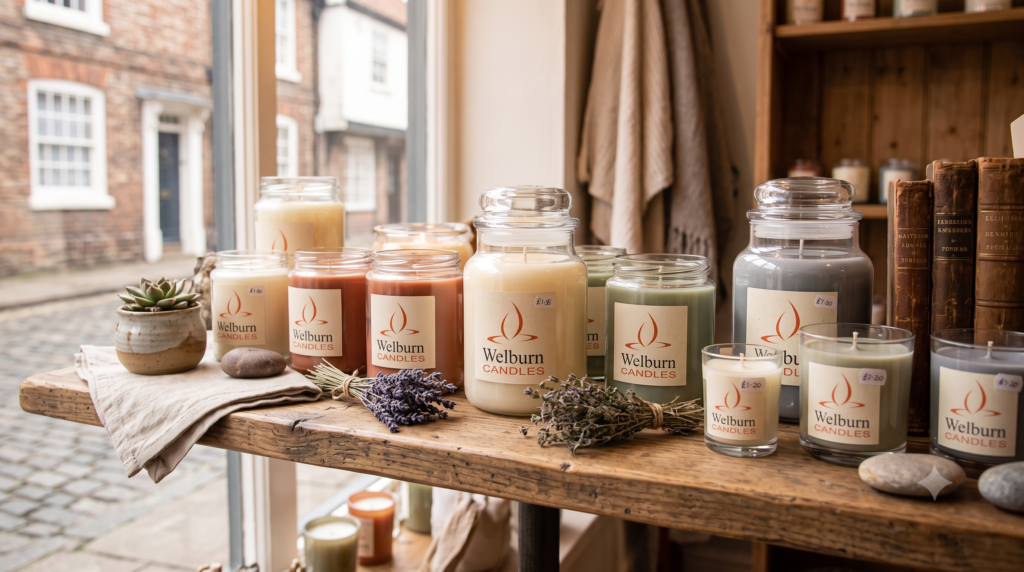
This guide is part of our main cluster: Jar Candle Manufacturers: A Complete Sourcing & Private Label Guide. See also our compliance-focused guide: Candle Manufacturers for US Buyers: ASTM, CPSC & Prop 65 Introduction The UK’s independent home fragrance and boutique retail scene has grown into one of Europe’s most design-conscious candle markets — think small shopfronts on high streets, curated gift shops, and a genuine appreciation for craftsmanship storytelling on packaging. For this segment, sourcing decisions matter as much as design decisions, and a growing number of UK buyers are choosing to work directly with jar candle manufacturers in India rather than through EU-based intermediaries. UK-Specific Compliance to Know Jar candles sold in the UK need to meet BS EN safety labelling requirements and CLP (Classification, Labelling and Packaging) rules covering fragrance ingredient disclosure and hazard warnings. These sit alongside — not instead of — general fragrance safety practices like IFRA compliance. A manufacturer experienced with UK-bound export shipments should be able to walk you through exactly what your labels need before production, not after your first shipment gets held at customs. Seasonal Ordering Patterns Worth Planning Around UK boutique demand follows predictable seasonal peaks — Christmas gifting is the single biggest driver, with a secondary spike around Mother’s Day. Planning your production schedule with these dates in mind, and confirming lead times with your manufacturer well in advance of peak season, avoids the scramble of trying to restock mid-December. Why Direct Sourcing Is Gaining Ground in the UK Historically, many UK boutique brands sourced through EU-based distributors adding a layer of cost and reduced customization. As more brands look to differentiate on fragrance and packaging rather than compete purely on price, direct private label partnerships with export-ready manufacturers have become the more attractive route — particularly for brands that want a genuinely unique jar shape or fragrance rather than a catalog item shared with competitors. Small-Batch Support for Boutique Retailers Unlike large retail chains, independent UK boutiques often need smaller, more frequent orders rather than one large annual bulk order. Look for a manufacturer willing to work in tiered MOQs that match this reality, rather than forcing boutique buyers into large-retailer minimums. Our UK Export Experience We’ve supported UK-bound candle brands with BS EN and CLP-aware labelling guidance, flexible MOQ tiers suited to boutique retail, and export logistics refined over 20+ years of shipping into the UK market. Get in touch to talk through your UK launch or restock timeline. FAQs What UK safety labels are required on jar candles? UK-bound jar candles need to meet BS EN safety labelling standards and CLP requirements around fragrance ingredient disclosure and hazard warnings. We can guide you through exact label requirements based on your specific fragrance formulation. What’s the shipping timeline from India to the UK? Timelines depend on order volume and whether you’re using stock or custom glass, but we plan UK shipments with enough buffer to hit key retail dates like the Christmas peak season if orders are placed with adequate lead time. Do you support small-batch orders for boutique retailers? Yes — we run tiered MOQs specifically so independent boutique retailers aren’t forced into large-chain minimum order sizes.
Candle Manufacturers for US Buyers: ASTM, CPSC & Prop 65 Explained
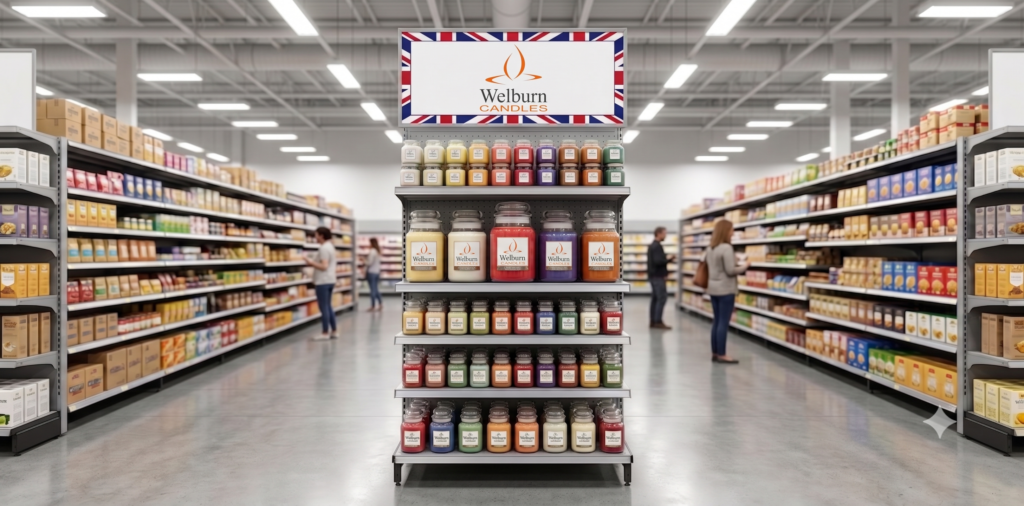
This guide is part of our main cluster: Candle Manufacturers: A Worldwide Buyer’s Market Guide. Also see: Germany | UK The United States remains the single largest candle market in the world, and US compliance runs through a different framework entirely from the EU or UK — built around ASTM voluntary standards, CPSC labelling requirements, and, for any product touching California, Proposition 65. Getting this right before your first shipment lands matters more in the US than almost any other market, because non-compliant products are routinely rejected by major retailers and marketplaces before they ever reach a shelf. The CPSC’s own guidance for candle manufacturers sets out the core requirements: candles with metal-cored wicks are effectively banned above a maximum lead limit under the Federal Hazardous Substances Act, and bulk shipments using compliant metal-cored wicks must carry a specific conformity statement on outer packaging. A cluster of ASTM standards — F2058 for fire safety labelling, F2179 for glass container specifications, F2417 for fire safety, among others — are voluntary in name but function as mandatory requirements, since major retailers and Amazon require documented compliance before listing. California Proposition 65 deserves specific attention because it catches many first-time US importers off guard. It restricts over 900 chemicals, including benzene compounds that can occur in paraffin wax, and applies to any product sold into California — including nationwide e-commerce sales, since a single California sale creates exposure. California represents roughly 12% of the US market, which is large enough that most brands treat Prop 65 compliance as a national baseline rather than a state-specific exception. For private label and retail-bound US shipments specifically, case-pack conventions (multiples of 6, 12, or 24), UPC barcoding, and vendor compliance audits for major retail chains add a further layer beyond the base safety standards — our guide to candle manufacturers for retailers covers this in detail. A manufacturer with genuine US export experience will have this documentation ready as a matter of course rather than scrambling to produce it after your first order — it’s one of the clearest signals of whether a supplier genuinely understands the US market or is applying a generic international process to it. Frequently Asked Questions What are the core US compliance requirements for candle manufacturers? ASTM standards (particularly F2058 for fire safety labelling and F2179 for glass containers), CPSC labelling requirements under the Federal Hazardous Substances Act, and California Proposition 65 for any product with US-wide or California distribution. Do I need Prop 65 compliance if I don’t sell directly to California? Yes, in practice. Selling online or through national retailers creates California exposure through indirect sales, and California represents roughly 12% of the US market, so most brands treat Prop 65 as a national requirement. Are ASTM candle standards legally mandatory in the US? Technically they are voluntary standards, but major retailers and marketplaces like Amazon require documented ASTM compliance before listing, which makes them effectively mandatory for market access. What happens if a candle shipment isn’t compliant when it reaches the US? Non-compliant products are commonly rejected by retailers and marketplaces at the listing stage, and can also face issues at customs or trigger liability under consumer protection law once in market.
Candle Manufacturers for UK Buyers: UKCA, BS EN & Post-Brexit Sourcing
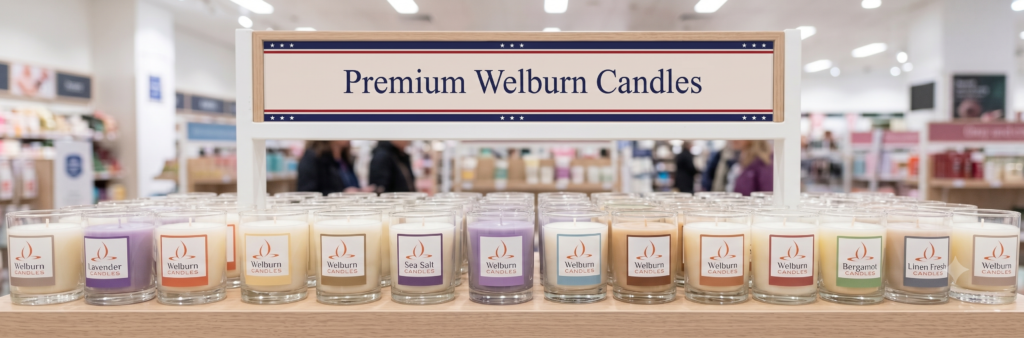
This guide is part of our main cluster: Candle Manufacturers: A Worldwide Buyer’s Market Guide. Also see: Germany | USA The UK candle market has grown into one of Europe’s largest, valued at roughly USD 828.6 million in 2025 and projected to reach USD 1.67 billion by 2033 at a 9.4% CAGR — one of the fastest growth rates of any major candle market globally. Votive candles currently lead by revenue, with premium and mid-market soy-blend candles taking share from mass-market paraffin as UK buyers trade up. The single biggest sourcing change for UK buyers since Brexit is the shift from CE marking to UKCA (UK Conformity Assessed) marking for goods sold in Great Britain. UKCA requirements are broadly aligned with the EU standards they replaced but require separate documentation and labelling specific to the UK market — a manufacturer that only holds EU CE documentation is not automatically compliant for UK sale, even though the underlying safety standards are similar. For candles specifically, UK compliance runs through BS EN standards — the British-adopted versions of the same EN 15426 (sooting), EN 15493 (fire safety), and EN 15494 (labelling) standards used across the EU — alongside general product safety regulation enforced by UK trading standards bodies. A manufacturer already exporting into the EU under EN standards has most of the technical groundwork done; what changes is the UKCA marking and UK-specific labelling requirements layered on top. UK retail buyers — from supermarket chains to specialist home fragrance retailers — increasingly expect natural wax formulations as standard rather than premium, with an estimated 50–60% of new UK candle launches in 2025–2026 carrying a natural-wax claim. This mirrors the wider European sustainability shift and is worth building into your product spec from the start rather than retrofitting later. For UK retail-specific packaging, barcode (EAN-13), and case-pack requirements, see our guide to candle manufacturers for retailers, and for a full specification checklist to use when requesting quotes for UK-bound production, see our RFQ guide. Frequently Asked Questions What changed for candle imports into the UK after Brexit? Goods sold in Great Britain now require UKCA marking rather than CE marking. The underlying safety standards are broadly aligned, but UKCA has its own documentation and labelling requirements that EU-only compliance doesn’t automatically satisfy. Are BS EN candle standards the same as EU EN standards? They’re the British-adopted equivalents of the same standards — EN 15426, EN 15493, and EN 15494 — so a manufacturer already meeting EU EN requirements has most of the technical work done for the UK market. How fast is the UK candle market growing? The UK candle market is projected to grow at roughly 9.4% CAGR from 2025 to 2033, one of the faster growth rates among major candle markets globally. Do UK buyers expect natural wax as standard now? Increasingly yes — an estimated 50–60% of new UK candle launches in 2025–2026 feature a natural-wax claim, making it close to a baseline expectation rather than a premium differentiator.
Candle Manufacturers for the German Market: LFGB, Compliance & Buyer Expectations
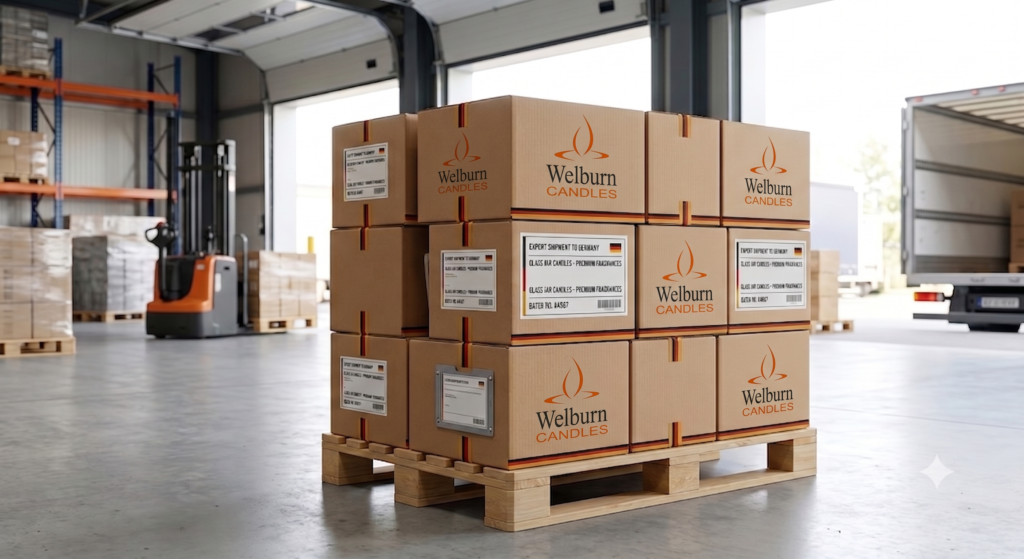
This guide is part of our main cluster: Candle Manufacturers: A Worldwide Buyer’s Market Guide. Also see: UK | USA Germany is one of the most consequential candle markets in Europe to get right, both because of its size and because German buyers and consumers apply some of the most exacting sustainability and quality expectations in the region. The German candle market generated roughly USD 922 million in revenue in 2025 and is projected to reach USD 1.5 billion by 2033, growing at a 6.5% CAGR — container candles are the largest segment, and wellness-positioned, essential-oil scented candles are one of the fastest-growing categories within it. Compliance for Germany runs through EU-wide frameworks rather than a country-specific standard: REACH restricts hazardous substances, CLP governs hazard labelling, and the EN candle standards (EN 15426 for sooting behaviour, EN 15493 for fire safety, EN 15494 for safe-burning label information) apply the same way they do across the rest of the EU. Germany’s own product safety enforcement — administered through the Bundesanstalt für Arbeitsschutz und Arbeitsmedizin (BAuA) for chemicals and the German market surveillance authorities for general product safety — sits on top of this EU baseline rather than replacing it. ECHA’s own candle-specific guidance is a useful starting reference for what a manufacturer’s documentation needs to cover before a shipment reaches German customs. Sustainability is not a nice-to-have for German buyers — it is close to a baseline expectation. Roughly 42% of German consumers report being more likely to buy products made from sustainable materials, and natural wax formulations (soy, beeswax) command a real, if smaller, share of the market against conventional paraffin. A candle manufacturer with genuine natural wax and sustainable packaging capability has a meaningfully easier time winning German retail listings than one offering paraffin-only production. German retail buyers, whether at drugstore chains, home décor retailers, or e-commerce marketplaces, typically expect fragrance allergen declarations on-pack (per CLP), full ingredient transparency, and clear country-of-origin marking. Documentation delays at this stage are one of the most common reasons a first shipment to Germany gets held at customs, so it’s worth confirming your manufacturer’s compliance paperwork is prepared before production, not after. For the RFQ specification checklist to send a candle manufacturer when sourcing for Germany or any EU destination, see our guide to requesting a quote from candle manufacturers, and for the private label side of a German launch, our private label packaging guide covers CLP-compliant label design specifically. Frequently Asked Questions What compliance framework applies to candles sold in Germany? Germany operates under the same EU-wide framework as other member states — REACH, CLP, and the EN candle standards — enforced domestically through German market surveillance authorities on top of that EU baseline. How important is sustainability to German candle buyers? Very. Roughly 42% of German consumers report favouring products made from sustainable materials, making natural wax and eco-packaging capability a genuine competitive advantage when sourcing for this market. What’s the largest candle segment in the German market? Container candles are currently the largest segment, with wellness-positioned scented and aromatherapy candles among the fastest-growing categories. Does a candle manufacturer need Germany-specific certification, separate from EU certification? No single Germany-only certification replaces EU compliance — REACH, CLP, and EN standards apply. What differs is the rigour of enforcement and buyer expectations around sustainability documentation.