Sustainable Candle Manufacturing: Practices, Materials, and Certifications That Matter
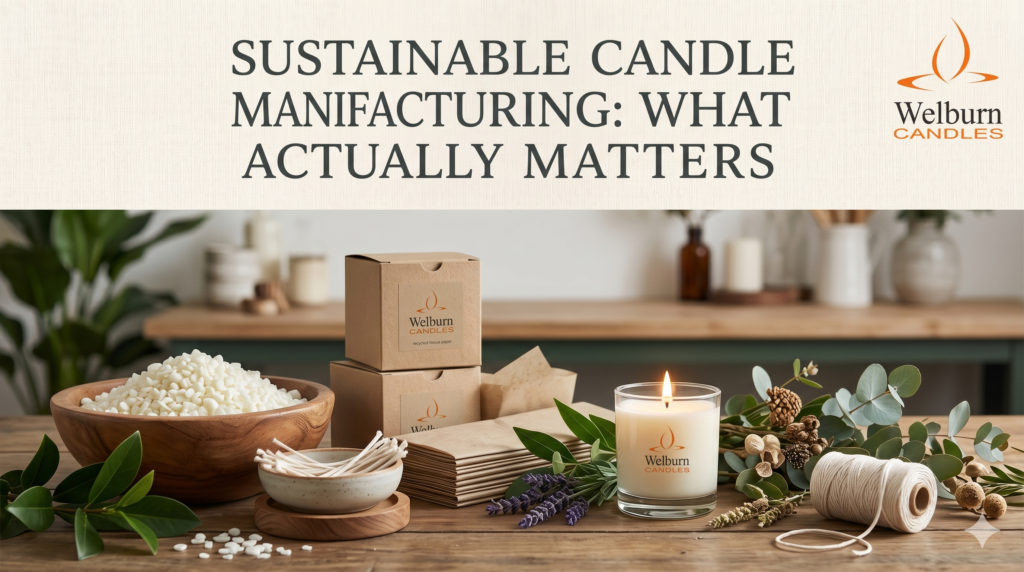
Sustainability has moved from a niche differentiator to a mainstream retail expectation — particularly in European markets where consumers, regulators, and retailers are increasingly holding brands accountable for their environmental and social impact. For candle brands, sustainability spans raw material sourcing, wax type selection, fragrance ingredients, packaging, manufacturing practices, and end-of-life product design. This guide explains what genuinely sustainable candle manufacturing looks like — and how Welburn Candles supports clients in building credibly sustainable candle brands. For our broader manufacturing overview, see our candle manufacturer standards guide. Sustainable Wax Selection Wax type is the most visible sustainability signal in a candle brand. Three wax options are well-positioned for sustainability claims: Soy Wax Derived from soybeans — a renewable agricultural crop — soy wax is the most widely used sustainable wax alternative globally. It burns cleaner than paraffin, supports higher fragrance loads, and carries natural sustainability credentials valued by consumers across Germany, the Netherlands, and Scandinavia. Welburn Candles sources soy wax from suppliers with responsible farming documentation. Coconut Wax Coconut wax — derived from sustainably harvested coconut oil — is the premium natural wax choice. Biodegradable, renewable, and producing an exceptionally clean burn, it is the preferred wax for luxury and wellness candle brands competing at the top of the European market. Coconut-Soy Blends Coconut-soy blends combine the sustainability credentials of both natural waxes with practical performance advantages. Welburn Candles recommends this wax for private label clients targeting premium European retail. Explore our scented candle wax types guide for a detailed wax comparison. Ethical Manufacturing Certifications Sustainability is not only about materials — it extends to the working conditions and ethical practices of the manufacturing facility. Welburn Candles holds SA 8000 social accountability certification — independent, audited confirmation that our facility meets international standards for worker rights, fair wages, and ethical management. This certification provides candle brands sourcing from Welburn Candles with a credible, verified ethical manufacturing story for their brand communications. Sustainable Fragrance Sourcing Fragrance ingredients carry their own sustainability considerations. Welburn Candles sources fragrance oils compliant with IFRA Standards and can provide certified organic essential oil formulations for clients pursuing organic or natural positioning. Our aromatherapy candle clients have access to GC/MS-tested, origin-verified essential oils — supporting both therapeutic authenticity and ingredient transparency. Eco-Conscious Packaging Options Packaging sustainability is increasingly scrutinised by European retail buyers. Welburn Candles offers a comprehensive range of eco-packaging options including FSC-certified kraft boxes, recycled tissue and void fill, water-based inks for label printing, and packaging designed for complete recyclability or compostability. See our private label candle packaging design guide for packaging options across market positions. Frequently Asked Questions Q: Can Welburn Candles produce fully vegan candles? A: Yes — soy wax, coconut wax, and coconut-soy blend candles are all plant-derived and suitable for vegan certification claims. Beeswax candles are not vegan. All Welburn Candles fragrance formulations can be verified as free from animal-derived ingredients. We can provide documentation to support vegan certification applications. Q: How does Welburn Candles manage carbon footprint in its production process? A: We continuously work to optimise energy efficiency in our production facility, source materials from certified responsible suppliers, and consolidate export shipments to minimise freight emissions. Contact our sustainability team for our current environmental performance overview. Q: Are there specific sustainability certifications that European candle retailers require? A: Requirements vary by retailer and market. The most widely requested are COSMOS Organic or COSMOS Natural (for organic and natural claims), FSC certification for packaging, REACH compliance documentation, and SA 8000 manufacturing certification. Welburn Candles supports clients in preparing sustainability documentation for specific retailer requirements. Building a genuinely sustainable candle brand? Contact Welburn Candles to discuss our sustainable manufacturing options and certification support.
How to Evaluate Candle Manufacturers Before Placing Your First Order
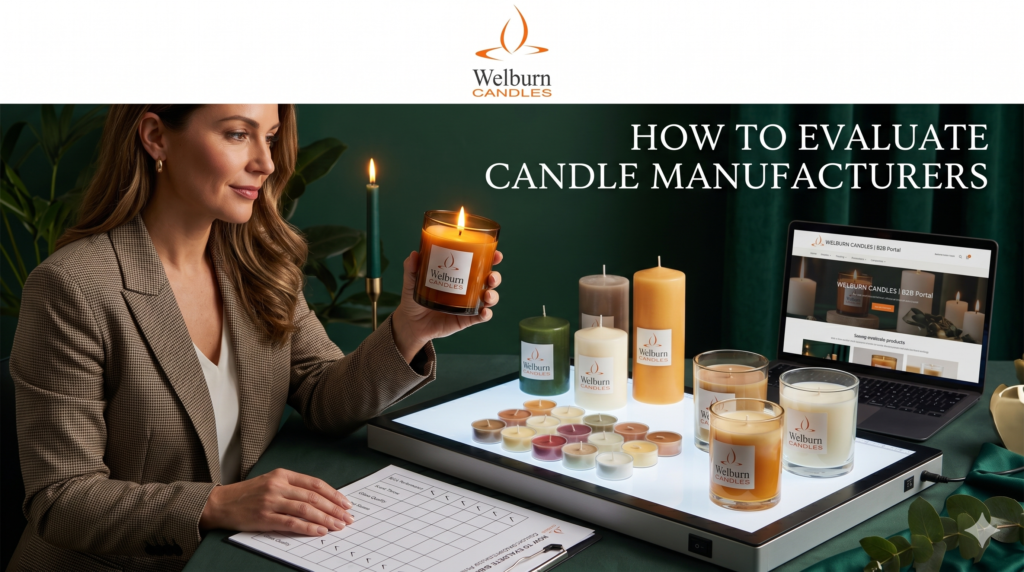
The decision to work with a candle manufacturer is not simply a procurement transaction — it is a brand-shaping commitment. The manufacturer you choose determines your product quality, your compliance standing in target markets, your ability to scale, and ultimately your customers’ experience. Choosing on price alone is one of the most common and costly mistakes new candle brand owners and retail buyers make. This guide provides a practical, comprehensive framework for evaluating candle manufacturers before committing to production. For an overview of what world-class candle manufacturing looks like in practice, explore our global candle manufacturer guide. Step 1: Verify Quality Management Certifications The first filter when evaluating candle manufacturers is documented quality management. A manufacturer without verifiable quality certifications is relying on goodwill rather than systems — and goodwill does not scale. The most important certification to look for is ISO 9001:2015, the internationally recognised quality management system standard. ISO 9001 certification means a manufacturer’s production processes are documented, audited, and controlled — guaranteeing consistent output across production runs of any size. At Welburn Candles, our ISO 9001:2015 certification and SA 8000 social accountability certification are available for inspection by all prospective clients. 💡 Ask any candle manufacturer you are considering to send their current ISO certificate before progressing to sampling. A legitimate manufacturer will share it immediately — with no hesitation. Step 2: Assess Compliance Documentation Capability Candle compliance requirements vary by market — and the gap between a manufacturer who truly understands compliance and one who merely knows the terminology is often only discovered when a shipment is rejected or a retailer refuses to list your product. For the European market, your candle manufacturer must demonstrate working knowledge of: For the US market, look for knowledge of ASTM F2179 candle safety standards and California Proposition 65 requirements. See our European candle compliance guide for a detailed breakdown of EU-specific requirements. Step 3: Request and Evaluate Production Samples No evaluation framework replaces physical sample testing. A professional candle manufacturer will provide samples rapidly and welcome burn testing scrutiny. When evaluating samples: At Welburn Candles, our sampling process includes burn-tested samples produced to your wax and fragrance brief, with full quality documentation. Step 4: Verify Production Capacity and Lead Times A manufacturer who can produce 1,000 units beautifully may not be able to produce 50,000 units to the same standard. Verify that your manufacturer has demonstrated capacity at the scale you require — now and as you grow. Welburn Candles produces 27 tonnes of candles per day — including 1 million tealights, 20,000 jar candles, and 200,000 household candles — using advanced German manufacturing machinery. This scale guarantees that your volume requirements can be accommodated without compromise. Explore our full product collections to understand the breadth of formats available. Step 5: Evaluate Export Experience and Logistics Capability For buyers sourcing from India or other manufacturing hubs, the manufacturer’s export experience is as important as their production capability. Ask for a list of countries they currently export to, examples of documentation packages they provide, and the freight partners they work with. Welburn Candles exports to over 20 countries including Italy, France, Spain, the Netherlands, Germany, the UK, the USA, and the Middle East. Our export documentation team handles Certificates of Origin, commercial invoices, IFRA certificates, REACH declarations, and CLP compliance documentation as standard. Frequently Asked Questions Q: How many candle manufacturer samples should I evaluate before choosing a partner? A: We recommend evaluating samples from three to five manufacturers before making a decision. This gives you a meaningful comparison baseline without creating an unmanageable evaluation workload. Prioritise manufacturers who offer burn-tested samples with accompanying quality documentation — not just aesthetic samples. Q: What is the most common red flag when evaluating candle manufacturers? A: The most common red flag is reluctance to share compliance documentation. A manufacturer who cannot immediately provide an IFRA compliance certificate, ISO quality certificate, or REACH declaration for a product they claim to be export-ready is either not compliant or is concealing a compliance gap. In either case, do not proceed. Q: How do I verify that a candle manufacturer’s quality certifications are genuine? A: All major quality certifications include the issuing body, the scope of certification, and an expiry date. You can verify ISO 9001 certifications by contacting the issuing certification body. For SA 8000 certification, the Social Accountability International (SAI) database is publicly searchable. Q: Should I use a trading company or source directly from a candle manufacturer? A: Direct manufacturer sourcing offers significant advantages: lower unit cost, direct quality oversight, faster sampling, and clearer compliance accountability. Trading companies add a layer of intermediation that increases cost and reduces transparency. Welburn Candles is a direct manufacturer — not a trading company — operating our own production facility in Bangalore, India. Q: What is a reasonable sampling timeline before placing a production order? A: A professional candle manufacturer with your brief in hand should deliver initial samples within a clearly agreed timeline depending on formulation complexity. Allow time after samples arrive for thorough burn testing — at minimum 40 hours of testing per new SKU before production approval. Rush decisions based on inadequate burn testing are a significant source of quality disappointment. Contact Welburn Candles to discuss your sampling requirements
Candle Manufacturers vs. Candle Suppliers: What’s the Difference and Why It Matters
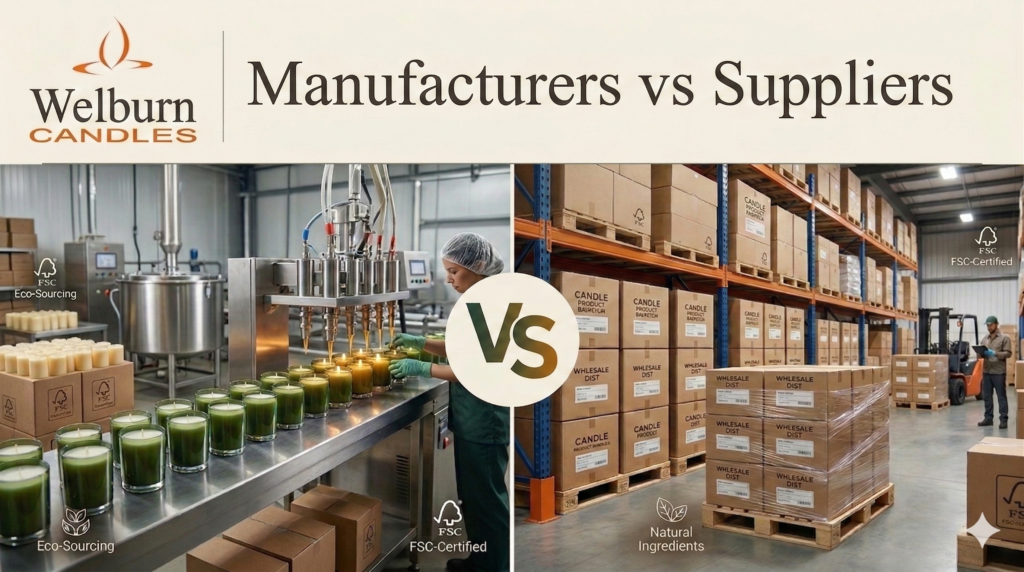
The difference between candle manufacturers and candle suppliers is one of the most commercially important distinctions in the candle industry — yet many brand owners don’t fully understand it until it costs them margin. Working directly with a candle manufacturer like Welburn Candles gives you full control over your product formulation, brand exclusivity, and unit pricing. Sourcing through a supplier, by contrast, means accepting someone else’s product at a marked-up price. According to Statista’s global candle market research, the candle industry is worth billions globally — and the brands winning the biggest share are those who manufacture directly. In this guide, we break down exactly what separates the two models and why it matters for your business. What Is a Candle Manufacturer and What Do They Offer? Candle Suppliers vs Candle Manufacturers: The Core Difference A candle supplier purchases finished candles from manufacturers and resells them at a markup. Suppliers offer convenience for small quantities but offer less customisation and higher per-unit costs. The Cost Impact: A Real-World Comparison Cost Factor Via Manufacturer Via Supplier Unit Cost £4.50–£6.00 £8.00–£10.50 Customisation Full (fragrance, wax, vessel) Limited or none Gross Margin 66%–75% 42%–55% Brand Exclusivity Full exclusivity None – product shared When Does It Make Sense to Use a Supplier? Suppliers can make sense when you need very small quantities to test a new market, require extremely fast turnaround for a one-off event, or want to supplement your core range with styles outside your manufacturer’s capabilities. Making the Transition From Supplier to Manufacturer Welburn Candles offers a dedicated onboarding process for brands making this transition, including product reformulation to match your existing SKUs and competitive pricing analysis. Also explore our private label candles manufacturing guide to understand how a direct manufacturing relationship enables brand differentiation. 📊 Brands that transition from supplier to manufacturer typically see 20–35% improvement in gross margin within the first 12 months. ❓ Frequently Asked Questions Q1: Can I get custom labelling from a candle supplier? A: Some suppliers offer white-label options, but these are limited to applying your label to existing products. True private label candle manufacturing — where the product itself is customised — requires working with a dedicated manufacturer like Welburn Candles. Q2: How do I know if I’m ready to work directly with a manufacturer? A: If you’re selling more than 200–300 candles per month and reinvesting profits into your brand, you’re likely ready to transition to a direct manufacturing relationship. The economics become compelling at this scale. Q3: Do manufacturers require long-term contracts? A: At Welburn Candles, we work with clients on both project-by-project bases and longer-term supply agreements. We believe in earning your repeat business through consistent quality and service rather than locking you into inflexible contracts. Q4: Can a manufacturer also handle my fulfilment and logistics? A: Many candle manufacturers, including Welburn Candles, offer integrated fulfilment services including pick-and-pack, direct-to-retailer shipping, and Amazon FBA preparation. This end-to-end service eliminates the need for an additional logistics partner. Q5: Is there a big quality difference between manufacturer and supplier candles? A: Generally, yes. Manufacturer-made candles are produced to your specific quality standards with full traceability. Supplier candles are produced to the manufacturer’s standards — which you typically have no influence over — and may be from multiple production batches, leading to inconsistency. Ready to take control of your candle supply chain? Contact Welburn Candles to discover how a direct manufacturing partnership transforms your brand.
Glass vs. Tin Candle Vessels: Which Is Right for Your Brand?
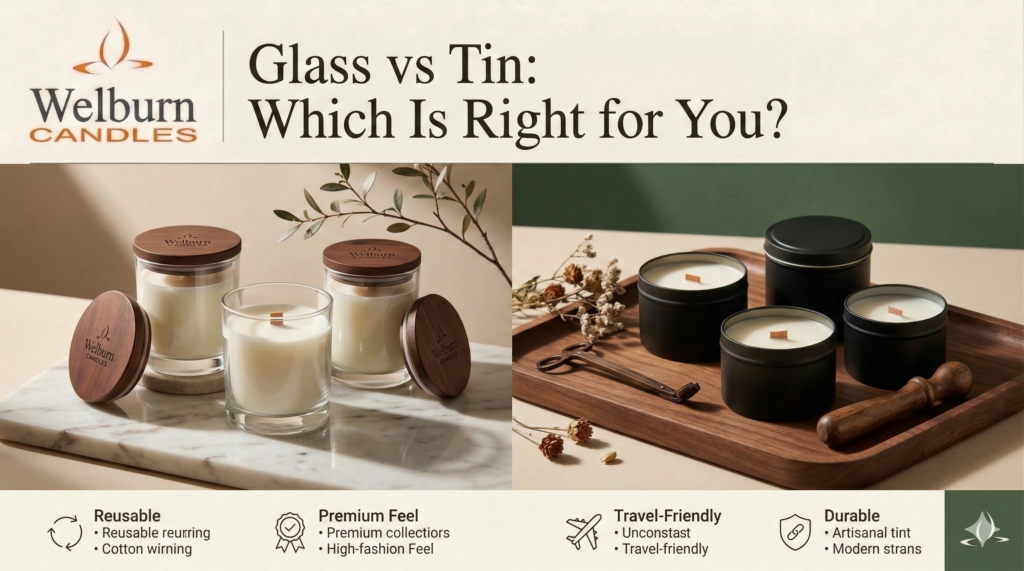
As experienced jar candle manufacturers, the team at Welburn Candles works with both glass and tin vessels daily, and we’ve seen firsthand how this choice impacts brand perception, retail pricing, sustainability credentials, and fragrance performance. Glass Candle Vessels: Premium Appeal and Performance Aesthetic Advantages Glass vessels communicate luxury, quality, and craft. In a retail environment, glass candles catch the light and create an inviting visual presentation that consistently outperforms tin on premium retail shelves. Fragrance Performance in Glass Glass is thermally stable and non-reactive, meaning it won’t interact with fragrance compounds over time. Particularly important for scented candle manufacturing where consistent fragrance throw throughout the burn is a key quality indicator. Sustainability of Glass Glass is 100% recyclable and reusable. Consumer research by WRAP UK shows that candle customers who repurpose glass vessels become significantly more loyal to the brand. Tin Candle Vessels: Practicality and Portability When Tin Wins Tin vessels are lighter (reducing shipping costs), virtually unbreakable (ideal for travel candle lines), and stack efficiently for compact retail displays. Fragrance Performance in Tin Tin conducts heat quickly, which can accelerate hot throw. However, tin can impart a faint metallic note to very delicate fragrances, so always test fragrance in your chosen vessel type. The Hybrid Approach: Building a Tiered Range Many of our most successful clients use both: glass vessels for their premium tier and tin for their accessible, everyday range. For more on our eco-forward packaging options, see our sustainable candle manufacturers guide. 💡 Welburn Candles tip: Start with a small glass vessel range (100–200ml) to establish premium positioning, then introduce tin vessels as an accessible entry point once the brand has traction. ❓ Frequently Asked Questions Q1: Does the vessel type affect burn time? A: Yes, significantly. Glass vessels retain heat differently than tin, affecting melt pool temperature and wax consumption rate. Our team tests and calibrates wick size, wax blend, and fragrance load for each specific vessel to ensure optimal burn time. Q2: Can I use the same wax formulation in glass and tin vessels? A: Not always. Different vessel materials have different thermal properties that affect how wax melts and fragrance releases. Welburn Candles develops vessel-specific formulations to ensure optimal performance in each container type. Q3: Which vessel type is better for high-end retail? A: Glass consistently outperforms tin in premium and high-end retail environments. The visual weight, light interaction, and tactile quality of glass signals quality to consumers in a way that tin cannot match. Q4: Are there minimum order differences between glass and tin vessels? A: In some cases, yes — glass vessels require more careful packing and have higher per-unit logistics costs, which can influence MOQ structures. Contact Welburn Candles to discuss your specific requirements. Q5: What’s the most popular jar candle vessel size for retail? A: In the UK and European markets, 200–250ml glass jar candles are the sweet spot for retail — they offer a generous burn time (typically 40–50 hours), a strong retail price point (£18–£28), and are manageable in size for gift and impulse purchase. Ready to choose the right vessel for your candle brand? Welburn Candles will guide you through all options and help you build a product range that sells.
How to Import Candles from India: A Complete Buyer’s Guide for UK, USA & Europe
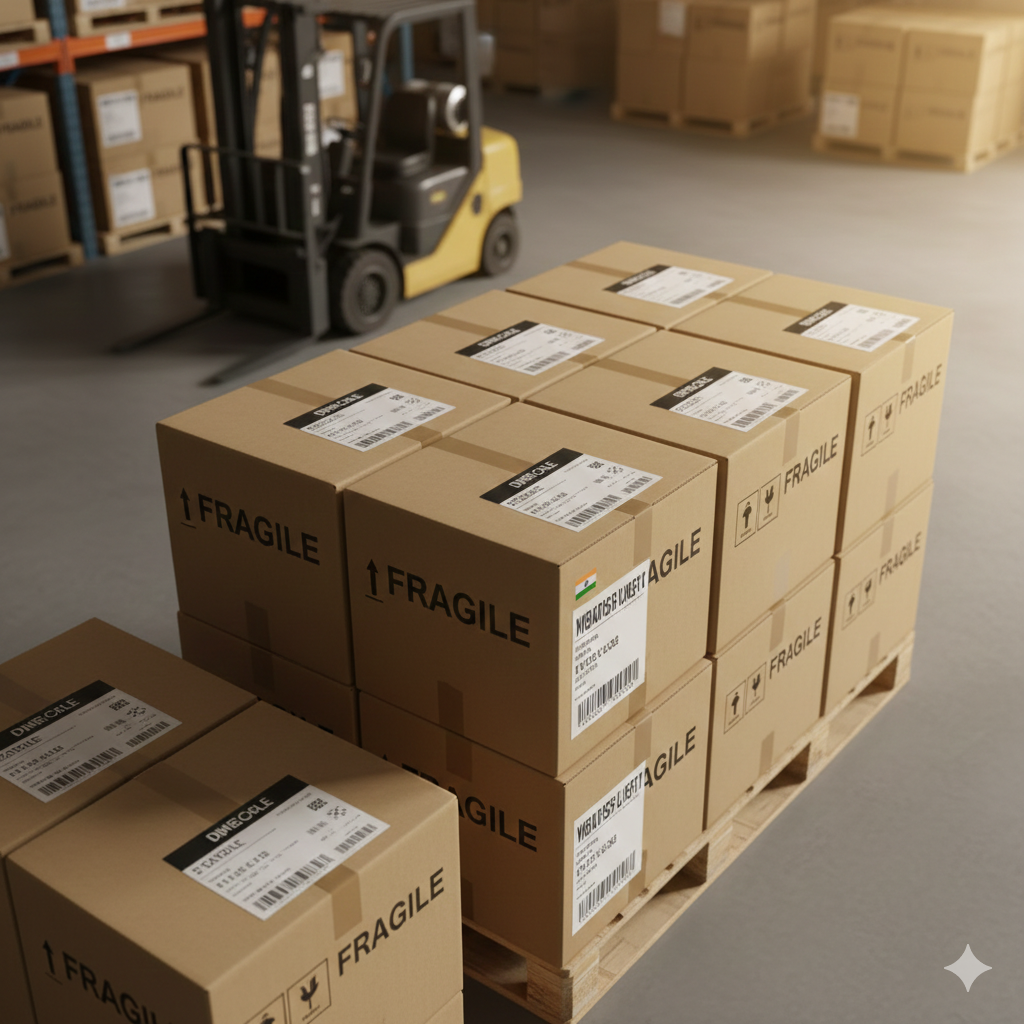
Importing candles from India is one of the smartest sourcing decisions a UK, US, or European buyer can make. Indian candle manufacturers combine high production capacity, ISO-certified quality, and export-ready logistics at prices that deliver strong margins globally. This guide explains the complete import process — from choosing your candle manufacturer in India to receiving your first delivery. Step 1: Identify the Right Product Type Before contacting manufacturers, clarify what you need: jar candles, pillar candles, tealights, household candles, or aromatherapy candles. Each format has different MOQ requirements, packaging specs, and compliance considerations for your target market. Step 2: Verify Manufacturer Credentials For EU and UK imports, verify ISO 9001:2015 quality management certification, SA 8000 social accountability certification, and IFRA-compliant fragrance documentation. For the USA, ASTM F2417 candle safety standards and MSDS sheets for all fragrances are key requirements. Step 3: Request Samples Always request physical samples before committing to a bulk order. Evaluate burn performance, fragrance throw (both cold and hot), label quality and print accuracy, and packaging robustness for long-distance shipping. Step 4: Understand MOQs and Pricing Indian candle manufacturers typically offer tiered pricing based on order volume. Tealights are often available from 10,000 units per SKU, while custom private label jar candles may start from 500–1,000 units. Always confirm pricing includes packaging, inner cartons, and master carton labelling. Step 5: Export Documentation & Customs Your manufacturer should provide: Commercial Invoice, Packing List, Bill of Lading or Airway Bill, Certificate of Origin, MSDS sheets for fragranced products, and EU Declaration of Conformity for European imports. Welburn’s export team handles all documentation as standard. Step 6: Shipping & Lead Times Sea freight from India to UK/Europe typically takes 18–28 days; to the US East Coast, 22–32 days. Standard lead times for bulk candle orders are 4–6 weeks after sample approval. For peak seasonal periods, book production at least 8–10 weeks in advance. For detailed guidance on accessing European distribution channels, see CBI’s market entry guide for candles. Why Choose Welburn Candles as Your Indian Supplier? Welburn Candles has been exporting candles to the UK, USA, EU, and beyond for over 20 years. Our B2B services are designed to make importing from India straightforward — from sample development and compliance documentation to freight coordination and after-sales support. ✔️ Ready to start your candle import journey? → Contact Welburn Candles for a custom quote
Welburn Candles – Trusted Candle Manufacturer in India

Candles have come a long way from being simple sources of light. Today, they are powerful tools for setting a mood, expressing luxury, and building an identity. Therefore, whether you’re a home décor brand, a gifting company, or a wellness label, finding the right candle manufacturer in India is crucial. At Welburn Candles, we combine time-honored craftsmanship with modern fragrance innovation to create candles that not only illuminate spaces but also define your brand. The Art of Candle Making at Welburn Every candle we create begins with a single idea—a fragrance, a mood, or a story you want your customers to experience. From that initial spark, we meticulously source pure wax blends and design elegant packaging. As a result, every step of our process shows our deep commitment to both quality and artistry. Furthermore, our skilled artisans ensure that each candle perfectly captures your brand’s essence, making it refined, soulful, and sustainable. Whether you’re a boutique brand or an established retailer, our flexible process is designed to ensure perfection at any scale. A Candle for Every Story: Our Diverse Collections This dedication to craft allows us to offer a wide range of candles, each crafted for a specific purpose. For instance, our collections include: From minimalist designs to premium jars with intricate gold foiling, every candle reflects a thoughtful design and a superior finish. The Welburn Advantage: Why Brands Partner With Us A great product is only part of the story. The true value lies in the partnership. Here’s why brands across the globe trust us: Let’s Build Your Signature Candle Line Together Are you ready to turn your ideas into signature creations that light up homes and hearts? Partner with Welburn Candles, your trusted candle manufacturer in India, and let’s build a collection that truly represents your brand. 👉 Let’s create something beautiful together. Visit www.welburncandles.com or reach out to our team today to explore private-label and OEM opportunities.