Private Label Candle Manufacturers for UAE & Saudi Retail
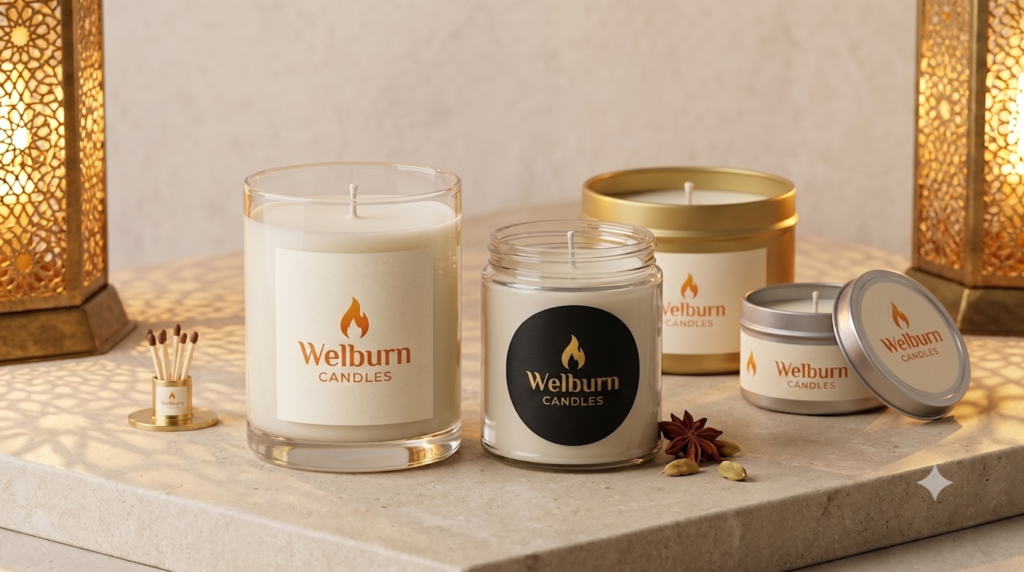
This guide is part of our main cluster: Private Label Candle Manufacturers for the Middle East & GCC Retail Market Introduction Within the broader GCC region, the UAE and Saudi Arabia represent the two largest and most distinct opportunities for a private label candle brand — each with its own gifting calendar, retail landscape, and import considerations worth understanding separately rather than treating the region as one uniform market. Gifting Occasions That Drive Volume Eid al-Fitr and Eid al-Adha remain the two biggest gifting occasions across both markets, with wedding season and corporate gifting adding secondary, more steady demand throughout the year. Planning production cycles around these dates — rather than treating candle demand as flat year-round — is one of the biggest adjustments Western-market brands need to make when entering the region. Labeling & Branding on Standard Packaging We supply UAE and Saudi private label orders in our standard jar and tin formats, with your branding, fragrance name, and required product information applied through custom labeling. This keeps landed cost and lead time predictable, which matters for brands testing regional demand before committing to a larger retail rollout. Import Documentation Basics Import requirements differ between UAE and Saudi Arabia, and both benefit significantly from working with a manufacturer that has existing trade lane experience into the region rather than navigating documentation for the first time on your own shipment. This is worth confirming directly and early with any manufacturer you’re evaluating. Fragrance Preferences: Oud, Amber & Beyond Oud and amber fragrance families carry deep cultural resonance across UAE and Saudi retail, and a private label line built without regional fragrance adaptation will consistently underperform against locally-attuned competitors. Pairing fragrance formulation expertise with regional preference research is essential here — arguably more important to getting right than packaging design. Corporate Gifting as a Market Entry Strategy For brands entering fresh, corporate gifting programs — tied to Ramadan, national holidays, or client relationship gifting — are often a faster, lower-risk entry point than full retail distribution. Our existing corporate gifting experience translates directly to this use case, since the custom-labeling and bulk-reliability requirements overlap closely. Our UAE & Saudi Export Support We support private label launches into UAE and Saudi Arabia with regionally-adapted fragrance formulation, standard packaging with custom private label labeling, and export documentation guidance drawn from established Middle East trade lanes. Get in touch to start scoping your UAE or Saudi launch. FAQs What import documentation is needed for UAE candle imports? Requirements vary by shipment type and value, and we can walk you through the specific documentation your launch will need based on our established UAE trade lane experience. What packaging do you offer for Eid or wedding gifting orders? We supply candles in our standard jar and tin formats with custom private label labeling — your branding and product details applied to our regular packaging, which keeps cost and lead time predictable for seasonal gifting orders. What’s the typical order-to-delivery timeline to the UAE? Timelines depend on order volume and fragrance formulation stage, but we plan around key gifting dates like Eid to ensure on-time arrival when orders are placed with adequate lead time.
Private Label Candle Manufacturers for the Middle East & GCC Retail Market
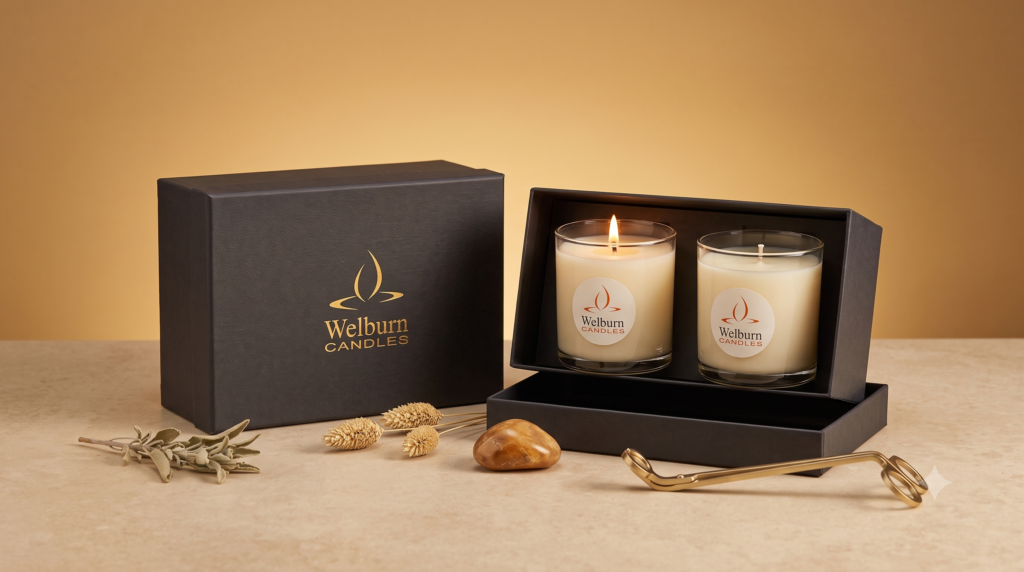
This guide is part of our main cluster: Private Label Candle Manufacturers: A Global Launch Guide. Also see: Italy & Spain | France | Netherlands Introduction: A Gifting Culture Built for Candle Brands The Middle East and GCC region — UAE, Saudi Arabia, and neighboring markets — represents one of the strongest gifting cultures in the world for a category like candles. Ramadan and Eid gifting, wedding favors, and corporate gifting all create sustained, recurring demand, and retail environments across Dubai, Abu Dhabi, and Riyadh reward brands that show up with genuine fragrance quality and consistent labeling. For a private label candle manufacturer, this is one of the most underserved regions relative to its actual retail opportunity. What Makes the GCC Market Different Fragrance expectations. Oud, amber, and floral-oriental fragrance families carry strong cultural resonance across the region — a private label fragrance line built purely around Western “clean/minimal” trends will underperform here without regional adaptation. Packaging expectations. We supply candles in standard jar and tin formats with fully custom private label labeling — your branding, fragrance name, and product information applied to our regular packaging. This keeps cost and lead time predictable while still giving your brand its own shelf identity through label design. Gifting occasions drive volume cycles. Unlike steady year-round Western retail demand, GCC candle demand spikes hard around Ramadan/Eid and wedding season, which affects how you should plan production scheduling and inventory with your manufacturer. Import & Compliance Basics While GCC import requirements vary by country, working with a manufacturer experienced in exporting to 20+ countries — including established Middle East trade lanes — significantly reduces the friction of navigating documentation for the first time. This is one of the clearest cases where direct manufacturer experience outweighs going through a regional trading intermediary who may not have candle-specific export documentation experience. Corporate Gifting as an Entry Point Corporate gifting is often the fastest way for a new brand to establish itself in the GCC market before tackling full retail distribution — and it’s a category we already have direct experience in through our corporate gifting work, which shares many of the same custom-labeling and bulk-reliability requirements as GCC corporate gift programs. Why Direct Manufacturer Partnership Matters Here Regional trading assemblers in the GCC often source finished candles from multiple factories and simply relabel them — which means no real control over fragrance consistency batch to batch, and limited ability to adapt formulations for regional preference. Partnering directly with a manufacturer means your fragrance profile, labeling, and quality stay consistent as you scale from a pilot order into a full retail rollout. Our GCC Export Capabilities With ISO 9001:2015 & SA 8000 certification and two decades of manufacturing experience, we support private label candle brands entering the Middle East with fragrance formulation adapted to regional preference, standard jar and tin packaging with custom private label labeling, and export documentation support drawing on our existing trade lanes into the region. Planning a GCC launch or expansion? Reach out to our team to talk through fragrance, labeling, and timelines. FAQs Do you export private label candles directly to the UAE and Saudi Arabia? Yes — we export to 20+ countries including established Middle East trade lanes, and can walk you through the specific documentation your launch will need. Can fragrance be customized for regional preferences like oud or amber? Yes, our in-house fragrance formulation team can develop oud-adjacent, amber, and floral-oriental blends alongside more Western-leaning fragrance profiles, so your line can reflect regional preference rather than a generic global default. What packaging do you offer for GCC private label orders? We supply candles in our standard jar and tin formats with fully custom private label labeling — your branding and product information applied to our regular packaging, keeping cost and lead time predictable for GCC launches. What are typical MOQs for GCC private label launches? MOQs follow the same tiered structure as our other private label programs — a pilot corporate gifting or boutique retail order looks very different from a full mall-retail rollout, and we’ll size the right starting point with you. Blog Banner Prompt: Private label jar candles with custom labels styled against a warm desert-gold gradient background, minimalist B2B product photography, no text overlay. Image Alt Text: Private label candle manufacturer supplying custom-labeled jar candles for GCC retail Image Title: Private Label Candle Manufacturers | Middle East & GCC Image Description: Private label jar candles from a Middle East and GCC candle manufacturer, showing standard packaging with custom label branding for regional retail.
Private Label Candles for Italy and Spain: Home Fragrance & Gifting Markets
This guide is part of our main cluster: Private Label Candle Manufacturers: A Global Launch Guide. Also see: France | Netherlands Italy and Spain share enough in common as candle markets — a strong design and gifting culture, significant tourism-driven hospitality demand, and a genuine appreciation for craftsmanship storytelling — that it’s worth covering them together, while noting the real differences in how private label brands should approach each. Italy’s home décor and design heritage sets a high bar for aesthetic execution. Italian retail buyers, particularly in the design-led home and gift segment, respond to vessel design and visual presentation as much as fragrance — a private label candle competing in Italian retail needs a manufacturer capable of genuinely premium finishing, not just a functional jar with a printed label. This is where working with a manufacturer offering real packaging and design development support pays off, rather than treating packaging as an afterthought to the wax and wick. Spain’s candle market draws real strength from its scale of tourism and hospitality — hotels, restaurants, and event venues across Spain’s coastal and city tourism hubs represent significant recurring demand alongside standard retail. A private label brand targeting Spanish hospitality specifically has a different sourcing profile (consistent bulk formats, reliable reorder cycles) than one targeting Spanish gift retail (design variety, seasonal collections, smaller more frequent runs). Both markets operate under the same EU-wide REACH, CLP, and EN candle standards framework covered in our broader sustainability and compliance demands guide — the differentiation for Italy and Spain is almost entirely in positioning and retail channel fit rather than in compliance paperwork, which is a genuine advantage if you’re already compliant for one EU market and expanding into the other. Gifting occasions — Christmas, Mother’s Day, and regional festival calendars specific to each country — drive meaningful seasonal spikes in both markets, worth planning production runs around rather than treating as a flat, year-round demand curve. Frequently Asked Questions What do Italian retail buyers expect from a private label candle? A high standard of vessel design and visual presentation — Italian retail, particularly in the design-led home and gift segment, rewards aesthetic execution as much as fragrance quality. Why is Spain a strong market for hospitality-focused private label candles? Spain’s large tourism and hospitality sector — hotels, restaurants, and event venues across its coastal and city tourism hubs — creates substantial, recurring bulk demand alongside standard retail. Do Italy and Spain require different compliance documentation from other EU markets? No — both operate under the same EU-wide REACH, CLP, and EN candle standards framework as the rest of the EU, so compliance work transfers between EU markets more easily than positioning strategy does. Should I plan private label production around seasonal demand in Italy and Spain? Yes — gifting occasions like Christmas, Mother’s Day, and regional festival calendars drive real seasonal spikes in both markets, worth building into your production schedule.
Private Label Candle Manufacturing for Dutch & Benelux Brands
This guide is part of our main cluster: Private Label Candle Manufacturers: A Global Launch Guide. Also see: France | Italy & Spain The Netherlands punches above its size as a candle market for two reasons worth understanding before you launch there: it functions as a genuine gateway into the wider Benelux region, and Dutch retail buyers apply some of the most consistent sustainability scrutiny in Europe — arguably more consistently than any other EU market, since the country’s own trade authority publishes detailed public guidance on exactly what candle importers need to meet. That guidance comes from CBI, the Netherlands’ Ministry of Foreign Affairs-backed trade promotion agency, whose EU candle market entry requirements overview is genuinely one of the clearest public breakdowns of REACH, GPSR, and the EN candle standards available anywhere — a useful reference to share directly with your manufacturer’s compliance team regardless of which EU country you’re ultimately targeting. For private label specifically, Dutch buyers respond strongly to demonstrable sustainability: recyclable or FSC-certified packaging, natural wax (soy, coconut, beeswax) over paraffin, and transparent ingredient labelling. Natural wax alternatives are explicitly positioned as the more environmentally responsible choice across the EU market generally, and this positioning lands with particular force in Dutch retail, where sustainability claims are expected to be substantiated rather than asserted. Distribution-wise, the Netherlands’ well-developed e-commerce and logistics infrastructure makes it a genuinely efficient base for a brand also planning to serve Belgium and Luxembourg — worth discussing with your manufacturer’s private label team if Benelux-wide distribution, not just a single-country launch, is the actual goal. For the packaging specification side of a sustainability-led Dutch launch, our private label packaging guide covers vessel and label material choices that support genuine (not just cosmetic) sustainability positioning. Frequently Asked Questions Why is the Netherlands a strategic market for private label candle launches? Beyond its own market size, the Netherlands functions as a practical gateway into the wider Benelux region, with strong e-commerce and logistics infrastructure supporting multi-country distribution. What sustainability standard do Dutch candle buyers expect? A high one — recyclable or FSC-certified packaging, natural wax over paraffin, and substantiated (not just claimed) sustainability credentials are close to baseline expectations in Dutch retail. Is there a useful public compliance resource for the Dutch/EU candle market? Yes — CBI, the Netherlands’ own trade promotion agency, publishes a detailed public overview of REACH, GPSR, and EN candle standards that applies EU-wide, not just to the Netherlands. Can a Netherlands-based private label launch also serve Belgium and Luxembourg? Yes, this is a common strategy — the Netherlands’ logistics infrastructure makes it a practical single entry point for Benelux-wide distribution rather than launching separately in each country.
Private Label Candles for the French Market: Compliance & Retail Positioning
This guide is part of our main cluster: Private Label Candle Manufacturers: A Global Launch Guide. Also see: Netherlands | Italy & Spain France has one of Europe’s most fragrance-literate consumer bases, and it also has one of the more actively enforced regulatory environments for candles specifically. The DGCCRF (Direction Générale de la Concurrence, de la Consommation et de la Répression des Fraudes) conducts regular checks of both physical and online candle sellers, which makes compliance paperwork less of a formality in France than in some neighbouring markets. Every candle placed on the French market needs CLP-compliant labelling and, where the wax and fragrance mixture is classified as hazardous, a UFI (Unique Formula Identifier) code and a Safety Data Sheet. French regulatory guidance on this is detailed and specific, and — significant for anyone sourcing in 2026 — new SDS requirements accounting for endocrine disruptors and nanoparticles become compulsory for new products from 1 May 2026, meaning any private label brief finalised this year should already build this into the compliance documentation your manufacturer prepares. On positioning, French retail rewards fragrance authenticity and craftsmanship narrative more than most European markets — French consumers are comfortable paying a premium for a candle with a genuine story about ingredient sourcing or scent development, which makes France a strong fit for brands with real formulation depth rather than generic fragrance-catalogue scents. Pharmacy-adjacent beauty retail and independent concept stores are notable channels for wellness-positioned candles specifically, alongside the department store and specialty home channels more familiar from other markets. For the essential oil and fragrance formulation side of a France-bound wellness or aromatherapy candle brand, our essential oil formulation guide covers the sourcing and testing standards that support this kind of premium positioning credibly. Practically, build in extra lead time for a France launch specifically to accommodate the SDS and UFI documentation cycle — this paperwork needs to be finalised before, not alongside, your production run, and rushing it is one of the more common causes of customs delays into France. Frequently Asked Questions What makes French candle compliance different from other EU markets? The underlying CLP and REACH framework is EU-wide, but France’s DGCCRF actively enforces compliance checks on sellers, and France has specific SDS and UFI documentation requirements that are strictly applied. What’s changing for French candle compliance in 2026? New Safety Data Sheet requirements accounting for endocrine disruptors and nanoparticles become compulsory for new products from 1 May 2026 — worth building into any private label brief finalised this year. How does French retail positioning differ for private label candles? French consumers respond well to fragrance authenticity and craftsmanship narrative, making France a strong fit for brands with genuine formulation depth rather than generic catalogue scents. Which retail channels work best for wellness-positioned candles in France? Pharmacy-adjacent beauty retail and independent concept stores are notable channels for wellness positioning, alongside department stores and specialty home retail.
Private Label Candle Manufacturers: A Global Launch Guide for Brand Owners
This is the main guide for this cluster. Country-specific guides: France | Netherlands | Italy & Spain The mechanics of private label — a manufacturer’s existing formulations, your brand identity applied through label, packaging, and marketing — stay broadly the same wherever you launch. What changes country by country is what local buyers expect to see on the label, which retail channels actually move product, and which compliance details determine whether a shipment clears customs cleanly. This guide gives the global framework; the linked country guides go deeper for France, the Netherlands, and Italy/Spain. For a step-by-step walkthrough of the private label process itself — from formulation brief to first production run — see our step-by-step private label launch guide, and for the packaging and compliance-label side specifically, our private label packaging guide covers vessel choice, label finish, and CLP allergen declaration requirements that apply broadly across EU destinations. Where country matters most is retail channel fit and consumer positioning. A private label wellness candle aimed at French pharmacy-adjacent beauty retail reads differently on-shelf than the same formulation positioned for a Dutch sustainability-led lifestyle retailer, even though the underlying product and much of the compliance paperwork can be identical. Brief your manufacturer on the specific retail channel and country you’re targeting from day one — it changes vessel choice, label aesthetic, and sometimes fragrance profile. Country of manufacture also carries different weight depending on the destination. “Made in India” candles crafted with premium natural wax and genuine fragrance formulation compete very differently in price-sensitive Southern European gift retail than in premium Northern European wellness retail — worth discussing openly with your manufacturer’s private label team rather than assuming one positioning strategy works everywhere. For the country-specific detail on France, the Netherlands, and Italy/Spain — including compliance nuances and the retail channels each market actually rewards — see the three guides linked at the top of this article. Frequently Asked Questions Does private label candle manufacturing work the same way in every country? The production model is consistent, but retail positioning, consumer expectations, and specific compliance documentation vary by destination market, so briefing your manufacturer on the target country matters. Should I use the same packaging design for every European market? You can, but tailoring label aesthetic and messaging to the specific retail channel in each country — sustainability-led in the Netherlands, gift-and-fragrance-led in Southern Europe, for instance — typically performs better than a single generic design. Does country of manufacture affect how a private label candle is perceived? Yes, and the effect varies by destination — it matters more in some price-sensitive segments than in premium wellness retail, where fragrance authenticity and wax quality often outweigh origin. Where can I find country-specific private label guidance? This guide links to dedicated country guides for France, the Netherlands, and Italy/Spain, alongside our general step-by-step launch guide and packaging guide.